
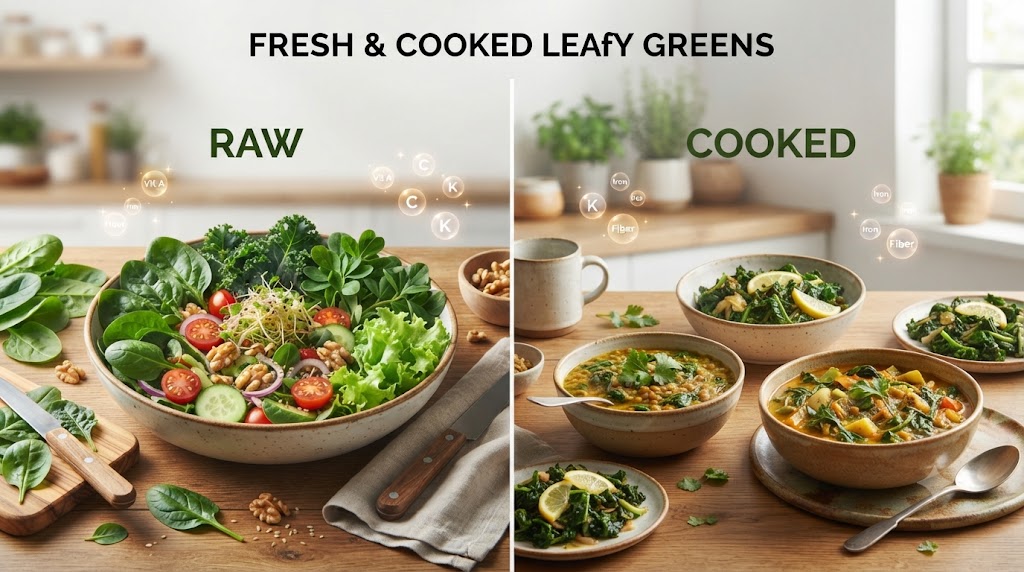
Leafy greens are some of the most versatile foods you can put on your plate. From spinach and kale to methi, amaranth, coriander, mustard greens, moringa, and lettuce, fresh leaves provide a wide range of vitamins, minerals, fiber, and beneficial plant compounds. But an interesting question often comes up: Are leafy greens more nutritious when eaten fresh, or does cooking actually make some nutrients easier for the body to use?
The answer isn’t simply “raw is better” or “cooked is better.” 🥬
Different nutrients respond differently to heat, water, time, and cooking methods. Some water-soluble vitamins can decrease during prolonged cooking, while cooking can improve the availability of certain carotenoids and soften plant tissues. The amount of nutrient loss or improvement also depends on the vegetable, temperature, cooking time, and whether the cooking liquid is consumed.
For example, lightly steaming spinach may preserve nutrients differently from boiling it in a large pot of water. Sautéing kale with a little oil can affect carotenoid availability differently from eating raw kale in a salad. Similarly, cooking methi can make its strong flavor and fibrous texture more pleasant, allowing it to become part of a satisfying meal.
The most practical approach is therefore not to choose between raw and cooked greens exclusively. Instead, enjoy a mixture of fresh and cooked leafy vegetables and use preparation methods that preserve flavor and nutrients as much as possible.
Let’s explore exactly what happens to leafy greens during preparation, which nutrients are most affected, and how you can cook your greens without unnecessarily sacrificing their nutritional value. 🌱
🥬 Why Leafy Greens Are Nutritional Powerhouses
Before comparing raw and cooked leaves, it helps to understand why leafy greens are so valuable in the first place.
Many leafy vegetables contain:
- 🟠 Carotenoids
- 🍊 Vitamin C
- 🦴 Vitamin K
- 🧬 Folate
- ⚡ Iron
- 💪 Magnesium
- 🥛 Calcium
- 🌾 Dietary fiber
- 🌿 Polyphenols and other plant compounds
The exact nutrient profile varies from one leaf to another.
Spinach
Spinach is particularly useful for vitamin K, folate, carotenoids, and several minerals.
Kale
Kale provides vitamin K, vitamin C, carotenoids, fiber, and other plant compounds.
Methi
Fresh fenugreek leaves contribute fiber and several micronutrients while adding a distinctive flavor to Indian dishes.
Moringa
Moringa leaves are nutrient-dense and commonly used in South Asian and African cuisines.
Mustard Greens
Mustard greens provide vitamin K, vitamin C, carotenoid compounds, and fiber.
Lettuce
Lettuce contains water, vitamin K, folate, and carotenoids and is commonly eaten raw.
The important point is that nutritional value isn’t determined by whether a leaf is raw or cooked alone. The type of leaf and the rest of your diet matter too.


🌱 Fresh Leaves: What Happens When You Eat Them Raw?
Eating leafy greens fresh has several advantages.
Raw greens retain their natural water content and do not undergo heat-related changes. Some heat-sensitive nutrients can therefore be better preserved when vegetables are eaten raw.
Examples include certain amounts of:
🍊 Vitamin C
🧬 Folate
🌿 Some heat-sensitive plant compounds
However, raw doesn’t automatically mean that every nutrient is more available.
Plant cell walls can make some compounds less accessible to digestion. Chewing breaks the leaves apart, but cooking can further soften plant tissues.
This is one reason the raw-versus-cooked comparison is more complicated than it first appears.
🍊 Vitamin C: Why Cooking Can Matter
Vitamin C is a water-soluble vitamin that is sensitive to heat.
Long cooking times and high temperatures can reduce vitamin C content. This is one reason lightly cooked vegetables may retain more vitamin C than vegetables that are boiled for a long time.
The amount lost depends on:
- Cooking temperature
- Cooking duration
- Amount of water used
- Whether the cooking water is discarded
- Size of the vegetable pieces
💡 Practical tip
If preserving vitamin C is a priority, consider:
- Steaming briefly
- Quick stir-frying
- Light sautéing
- Eating some greens raw when appropriate
Adding fresh lemon juice after cooking can also contribute vitamin C and brighten the flavor of leafy dishes. 🍋
🧬 Folate and Cooking
Folate is another water-soluble B vitamin found in many leafy greens.
Because folate can be affected by heat and water, prolonged boiling may cause greater losses than shorter cooking methods.
This doesn’t mean you should avoid cooked greens.
Instead, consider cooking methods that use:
🔥 Less water
⏱️ Shorter cooking times
🥘 Moderate heat
If you prepare greens in a soup, stew, dal, or curry, consuming the cooking liquid can help retain nutrients that have moved into the water.
🟠 Carotenoids: When Cooking Can Help
Here’s where the story becomes interesting.
Leafy greens contain carotenoids such as beta-carotene and lutein. Some cooking methods can soften plant tissues and increase the amount of certain carotenoids that become available for absorption.
In other words:
Cooking can sometimes make certain compounds easier for the body to access.
This is one reason cooked vegetables shouldn’t be considered nutritionally inferior to raw vegetables.
🥕 Example
Raw spinach contains carotenoids, but lightly cooking spinach can change the plant matrix and potentially increase the accessibility of some carotenoid compounds.
Adding a modest amount of healthy fat can also support absorption of fat-soluble carotenoids.
For example:
🥬 Cooked spinach + 🫒 small amount of oil
can be a useful combination.
🦴 Vitamin K and Cooking
Leafy greens are among the richest food sources of vitamin K.
Vitamin K is a fat-soluble vitamin involved in normal blood clotting and bone metabolism.
Vitamin K is generally relatively stable compared with vitamin C, although cooking and water loss can still alter the concentration of nutrients per serving.
Because different preparation methods change the amount of water in a vegetable, comparing raw and cooked food strictly by weight can sometimes be misleading.
A cooked portion may contain less water and therefore appear more nutrient-dense per gram, even though some heat-sensitive nutrients have decreased.
💧 The Role of Water in Cooking
One of the biggest factors affecting nutrient retention is water.
When vegetables are boiled, some water-soluble nutrients can move from the leaves into the cooking water.
If you drain and discard that water, some of those nutrients are lost from the meal.
This is particularly relevant for:
🍊 Vitamin C
🧬 Folate
💧 Other water-soluble compounds
Compare:
Boiled spinach → cooking water discarded
versus
Spinach cooked in dal → cooking liquid consumed
The second approach may help retain more of the nutrients that have moved into the liquid.
This is one reason soups, stews, dals, and curries can be excellent ways to prepare vegetables.
🥬 Boiling: Convenient but Not Always the Best for Nutrient Retention
Boiling is one of the simplest cooking methods.
You simply place the greens in boiling water and cook until tender.
Advantages
✅ Easy
✅ Softens tough greens
✅ Works well for soups and dals
Potential disadvantage
❌ Some water-soluble nutrients can leach into the cooking water.
If the water is discarded, those nutrients may be lost from the meal.
Better approach
Use the cooking liquid in:
🥣 Soups
🍛 Curries
🥣 Dal
🌿 Vegetable stews
This helps reduce unnecessary nutrient loss.
🥘 Steaming: A Gentle Option
Steaming cooks vegetables using hot vapor rather than immersing them directly in water.
Because the greens aren’t sitting in a large volume of water, there may be less leaching of water-soluble nutrients.
Steaming also tends to preserve the vegetable’s color and texture when done correctly.
Great for:
🥬 Spinach
🌿 Kale
🥦 Mixed greens
🌱 Moringa
🥬 Other tender vegetables
Steam until the leaves are tender rather than cooking them for unnecessarily long periods.


🔥 Sautéing: Fast and Flavorful
Sautéing involves cooking greens quickly in a small amount of oil.
This method is especially popular in Indian and Mediterranean cooking.
For example:
🥬 Spinach + garlic + cumin
🌿 Methi + onion + tomato
🥬 Kale + garlic + lemon
Advantages
✅ Short cooking time
✅ Little water
✅ Excellent flavor
✅ Easy to combine with spices
Because cooking time is short and little water is used, sautéing can be a practical compromise between raw and heavily boiled vegetables.
The addition of a modest amount of oil can also help with absorption of fat-soluble compounds such as carotenoids.
🍳 Stir-Frying: High Heat, Short Time
Stir-frying cooks vegetables quickly at relatively high heat.
The short cooking time can help maintain texture and reduce prolonged nutrient exposure to heat.
However, very high temperatures and excessive cooking can still damage some heat-sensitive nutrients.
The goal is:
High enough heat to cook quickly + short enough time to avoid unnecessary overcooking.
🌿 Indian Tempering and Leafy Greens
Indian cooking has a particularly useful method for adding flavor to leafy vegetables: tadka or tempering.
A small amount of oil or ghee is heated, and ingredients such as:
- Mustard seeds
- Cumin
- Garlic
- Green chili
- Curry leaves
- Dried red chili
are added before being combined with the greens.
This method can make leafy vegetables much more appealing without requiring large amounts of oil.
For example:
Spinach + garlic + cumin + lemon
can turn a simple vegetable into a flavorful side dish.
🥗 Raw Salads: When Fresh Is Best
Some leafy greens are particularly well suited to raw consumption.
Examples include:
🥗 Lettuce
🌿 Arugula
🥬 Baby spinach
🌱 Tender herbs
Raw greens are convenient and require no cooking.
A simple salad might contain:
- Baby spinach
- Lettuce
- Cucumber
- Tomato
- Carrot
- Chickpeas
- Lemon juice
This combination provides fiber, water, vitamins, minerals, and plant compounds.
However, raw vegetables must be handled carefully.
Wash fresh produce thoroughly under clean running water, use clean utensils, and refrigerate perishable prepared salads promptly.
🔬 Nutrient Comparison: Raw vs. Cooked
There is no single winner.
| Nutrient/Feature | Raw Leaves 🥗 | Cooked Leaves 🍲 |
|---|---|---|
| Vitamin C | Often better preserved | Can decrease with heat |
| Folate | Can be better preserved | May decrease with prolonged cooking |
| Vitamin K | Generally retained | Usually remains substantial |
| Carotenoids | Present | Cooking may improve accessibility |
| Fiber | Present | Usually remains, though texture changes |
| Water content | Higher | Lower |
| Texture | Crisp/tender | Softer |
| Digestibility | May be harder for some people | Often easier for some people |
| Flavor | Fresh/green | Deeper/cooked |
| Convenience | Very high for salads | High for meals |
This table illustrates why both raw and cooked vegetables have a place in a healthy diet.
🥬 Spinach: Raw vs. Cooked
Spinach provides an excellent example of the differences between fresh and cooked greens.
Raw spinach
Advantages:
🥗 Fresh texture
🍊 Good preservation of heat-sensitive nutrients
💧 High water content
Easy for salads and smoothies.
Cooked spinach
Advantages:
🍲 Softer texture
🥣 Easy to combine with dal
🍛 Works in curries
🟠 Cooking may improve accessibility of some carotenoids
Cooking also dramatically reduces the volume of spinach.
You might easily eat a large bowl of cooked spinach even though the same amount would be difficult to consume raw.
This means cooking can indirectly make it easier to consume larger quantities of greens.
🌿 Methi: Fresh vs. Cooked
Fresh methi has a strong, slightly bitter flavor.
Cooking softens the leaves and allows them to combine with ingredients such as:
🥔 Potato
🧅 Onion
🍅 Tomato
🧄 Garlic
🥣 Yogurt
Cooking doesn’t turn methi into a less nutritious food. Instead, it changes its texture, flavor, water content, and nutrient profile.
Methi is particularly useful in:
🫓 Parathas
🥣 Dal
🥔 Aloo methi
🍚 Rice
🥘 Curries
🌱 Moringa Leaves: Fresh vs. Cooked
Moringa leaves are commonly cooked in South Asian dishes.
They can be added to:
🥣 Dal
🍛 Curries
🥘 Vegetable preparations
🍳 Eggs
Cooking makes the leaves softer and easier to combine with other ingredients.
As with other greens, avoid unnecessarily long cooking if you want to preserve heat-sensitive nutrients.
🥬 Kale: Raw vs. Cooked
Raw kale can be quite fibrous.
For salads, massaging chopped kale with a little dressing can soften the leaves.
Cooking offers another option.
Raw kale
🥗 Excellent for salads
🌿 Crisp texture
🍋 Works well with lemon dressing
Cooked kale
🍲 Softer
🥣 Good for soups
🍳 Useful in stir-fries
If raw kale feels difficult to digest, lightly cooking it may make it more comfortable.
🥗 Does Cooking Destroy All the Nutrients?
No.
This is one of the most common misconceptions about vegetables.
Cooking can reduce some nutrients, but it does not eliminate the nutritional value of vegetables.
Cooked greens can still provide:
🌾 Fiber
🦴 Vitamin K
🟠 Carotenoids
💪 Minerals
🌿 Plant compounds
And cooking can sometimes increase the accessibility of certain nutrients or compounds.
The right question isn’t:
“Does cooking destroy nutrients?”
A better question is:
“Which nutrients are affected, and which cooking method preserves them best?”
⏱️ Why Cooking Time Matters
In general, prolonged exposure to heat can increase losses of heat-sensitive nutrients.
For example:
Lightly steamed spinach
may retain more vitamin C than
spinach boiled for a long time in plenty of water.
This doesn’t mean that every short cooking method is automatically superior. Different foods behave differently.
The practical rule is:
Cook leafy greens until they’re tender and enjoyable, but avoid unnecessarily long cooking.
🫒 Why a Little Healthy Fat Can Be Useful
Some nutrients and plant compounds are fat-soluble.
Carotenoids such as beta-carotene and lutein can be better absorbed when consumed with some dietary fat.
This doesn’t mean you need to cook vegetables in large amounts of oil.
A small amount can be enough.
For example:
🥬 Spinach + 1 teaspoon olive oil
or
🌿 Methi + a moderate amount of cooking oil
can be part of a balanced meal.
Healthy fat sources can also include:
🥑 Avocado
🥜 Nuts
🌻 Seeds
🫒 Plant oils
🍋 Add Vitamin C After Cooking
Adding fresh lemon juice to cooked leafy vegetables is a simple culinary trick.
It can:
🍋 Brighten flavor
🍊 Add vitamin C
🥗 Make vegetables more refreshing
Vitamin C can also help increase absorption of non-heme iron from plant foods when eaten in the same meal.
Try:
Spinach dal + lemon
Methi sabzi + tomato
Mustard greens + lemon
These combinations are both flavorful and nutritionally sensible.
🥣 Cooking Greens in Soups and Dal
One of the smartest ways to cook leafy vegetables is to include them in dishes where the cooking liquid is consumed.
For example:
Spinach Dal
The spinach is cooked directly in the lentils.
If water-soluble nutrients move into the cooking liquid, they remain part of the meal.
Green Vegetable Soup
The greens and their cooking liquid are consumed together.
Methi Curry
The leaves cook in the gravy rather than being boiled and discarded.
This approach can help reduce nutrient loss associated with draining cooking water.
🌿 Does Chopping Affect Nutrients?
Cutting vegetables can expose plant tissues to oxygen and potentially affect certain compounds over time.
However, you shouldn’t avoid chopping vegetables because of this.
The practical approach is:
🔪 Cut greens reasonably close to cooking or serving.
⏱️ Don’t leave chopped vegetables sitting around unnecessarily.
🧊 Refrigerate prepared vegetables when appropriate.
🍳 Cook them relatively soon after preparation.
Good food hygiene is more important than worrying about tiny nutrient differences caused by cutting.
🧊 What About Frozen Leafy Greens?
Frozen greens can be an excellent practical option.
Freezing often occurs relatively soon after harvesting, which can help preserve nutrients.
Frozen spinach, kale, and other vegetables can be convenient for:
🥣 Soups
🍛 Curries
🥣 Dal
🍳 Omelets
Frozen greens may have a different texture from fresh leaves after thawing, but they can still contribute valuable nutrients.
Don’t assume fresh always means nutritionally superior.
Storage time also affects nutrients.
🌱 Fresh Doesn’t Always Mean More Nutritious
“Fresh” sounds synonymous with healthy, but nutrition depends on several factors.
A leafy vegetable that has been stored for several days may lose some sensitive nutrients.
A frozen vegetable processed soon after harvest may retain significant nutritional value.
Similarly, a cooked vegetable can be more enjoyable and easier to eat, which may encourage higher vegetable consumption.
The healthiest option is often the one that helps you eat vegetables consistently and enjoyably.
👩🍳 10 Tips for Preserving Nutrients When Cooking Greens
1. 🥬 Don’t Overcook
Cook until tender rather than continuing unnecessarily.
2. 💧 Use Less Water
Steaming and sautéing can reduce nutrient leaching.
3. 🥣 Consume the Cooking Liquid
Soups, dals, and curries retain nutrients that move into the liquid.
4. 🔥 Use Moderate Heat
Avoid excessive heat when it’s not necessary.
5. ⏱️ Keep Cooking Time Reasonable
Shorter cooking often helps preserve heat-sensitive nutrients.
6. 🍋 Add Lemon After Cooking
This improves flavor and adds vitamin C.
7. 🫒 Include a Little Healthy Fat
A modest amount can help with absorption of certain fat-soluble compounds.
8. 🥗 Eat Some Greens Raw
Salads and fresh herbs can provide variety.
9. 🥘 Eat Some Greens Cooked
Cooking can improve texture and accessibility of some compounds.
10. 🌿 Rotate Your Greens
Don’t rely exclusively on spinach or kale. Try methi, moringa, amaranth, mustard greens, lettuce, and other varieties.
🥗 A Practical Raw-and-Cooked Green Eating Plan
You don’t have to choose one approach.
Here’s an example:
Breakfast 🍳
Spinach omelet
Lunch 🍛
Methi dal + whole-wheat roti
Snack 🥗
Fresh cucumber and lettuce salad
Dinner 🥣
Mixed vegetable soup with kale
This pattern provides both raw and cooked greens.
🍽️ Fresh vs. Cooked: Which Should You Choose?
The answer depends on the situation.
Choose Fresh When:
🥗 You want a quick salad.
🌿 You are using tender leaves.
🍊 You want to minimize heat exposure to vitamin C.
🥬 You enjoy crisp textures.
Choose Cooked When:
🍲 Leaves are tough or fibrous.
🥣 You want a warm meal.
🍛 You’re making dal or curry.
🌿 You prefer softer textures.
🟠 You want to improve accessibility of some plant compounds.
Best of all:
Use both.
⚠️ People With Sensitive Digestion
Some people find raw leafy greens difficult to tolerate.
Raw vegetables contain intact plant structures that may be harder to break down, and large quantities of fiber can cause bloating or gas in people who aren’t accustomed to it.
If this happens, try:
🍲 Lightly steaming greens
🥣 Cooking them into dal
🍛 Adding them to soups
🥘 Sautéing them briefly
🌿 Starting with smaller portions
If digestive symptoms are persistent, severe, or associated with unexplained weight loss, blood in the stool, persistent vomiting, or significant abdominal pain, seek medical advice rather than assuming the problem is simply caused by vegetables.
🧼 Food Safety: Raw Greens Need Extra Attention
When eating leafy greens raw, food safety becomes especially important.
Always:
🧼 Wash your hands.
🚰 Rinse fresh produce thoroughly under clean running water.
🔪 Use clean utensils.
🥗 Prevent cross-contamination.
🧊 Refrigerate prepared salads.
Avoid washing vegetables with soap, bleach, or household cleaning chemicals.
Cooking provides an additional food-safety step, but it doesn’t replace good hygiene.
🌈 The Bigger Picture: Variety Matters More Than Raw vs. Cooked
It’s easy to become obsessed with whether one preparation method is “healthier.”
But the bigger nutritional picture is much more important.
Instead of asking:
“Should I always eat spinach raw?”
ask:
“Am I eating enough different vegetables throughout the week?”
Instead of asking:
“Does boiling destroy nutrients?”
ask:
“Can I use different cooking methods and avoid unnecessarily long cooking?”
And instead of worrying that cooking makes vegetables unhealthy, remember that cooked vegetables remain nutritious foods.
❓ Frequently Asked Questions
Is raw spinach healthier than cooked spinach?
Not necessarily. Raw spinach retains some heat-sensitive nutrients better, while cooking can reduce volume and may improve accessibility of certain carotenoids. Both can be part of a healthy diet.
Does cooking destroy vitamin C?
Heat can reduce vitamin C, particularly with prolonged cooking. Shorter cooking methods generally preserve more than prolonged boiling.
Does cooking increase nutrient absorption?
Cooking can improve the accessibility of some compounds, including certain carotenoids, by softening plant cell structures.
Is steaming better than boiling?
Steaming can help limit nutrient loss into cooking water because the vegetables aren’t immersed. However, overall nutrition depends on the vegetable and cooking method.
Should I eat leafy greens with oil?
A modest amount of dietary fat can help with absorption of fat-soluble compounds such as carotenoids. You don’t need large amounts of oil.
Is boiled spinach unhealthy?
No. Boiled spinach is still nutritious. If the cooking water is discarded, however, some water-soluble nutrients may be lost.
Is frozen spinach nutritious?
Yes. Frozen spinach can be a convenient and nutritious option, particularly when stored appropriately.
Should I eat leafy greens every day?
Regularly eating a variety of vegetables is generally a good dietary habit. You can rotate between fresh salads and cooked greens.
🌿 Final Verdict: Fresh or Cooked?
So, which is more nutritious—fresh leaves or cooked leaves?
There is no universal winner. 🥬
Fresh leafy greens can preserve more of certain heat-sensitive nutrients, especially when eaten soon after preparation. Cooked greens can become softer, easier to eat, and sometimes easier for the body to access certain plant compounds. The cooking method matters enormously: prolonged boiling in large amounts of water can cause greater nutrient losses than steaming or quick sautéing.
The smartest strategy is therefore to combine both fresh and cooked leafy greens.
Enjoy spinach in a fresh salad one day and spinach dal the next. Eat crisp lettuce in a sandwich, then enjoy cooked methi with roti. Add fresh coriander to your meals while cooking moringa or mustard greens into a nutritious curry. 🌿🥗
Use shorter cooking times when practical, avoid unnecessary amounts of water, consume cooking liquids in soups and dals, and include a small amount of healthy fat when appropriate.
Most importantly, don’t let the pursuit of perfect nutrient retention stop you from eating vegetables.
The best leafy green is ultimately the one you enjoy, prepare safely, and eat regularly. 💚
A balanced diet doesn’t need to be complicated. Mix fresh and cooked vegetables, rotate different leafy greens, combine them with whole grains and protein-rich foods, and enjoy the incredible variety that plants can bring to your plate.
Fresh or cooked? The best answer is: both. 🌱🥗🍲