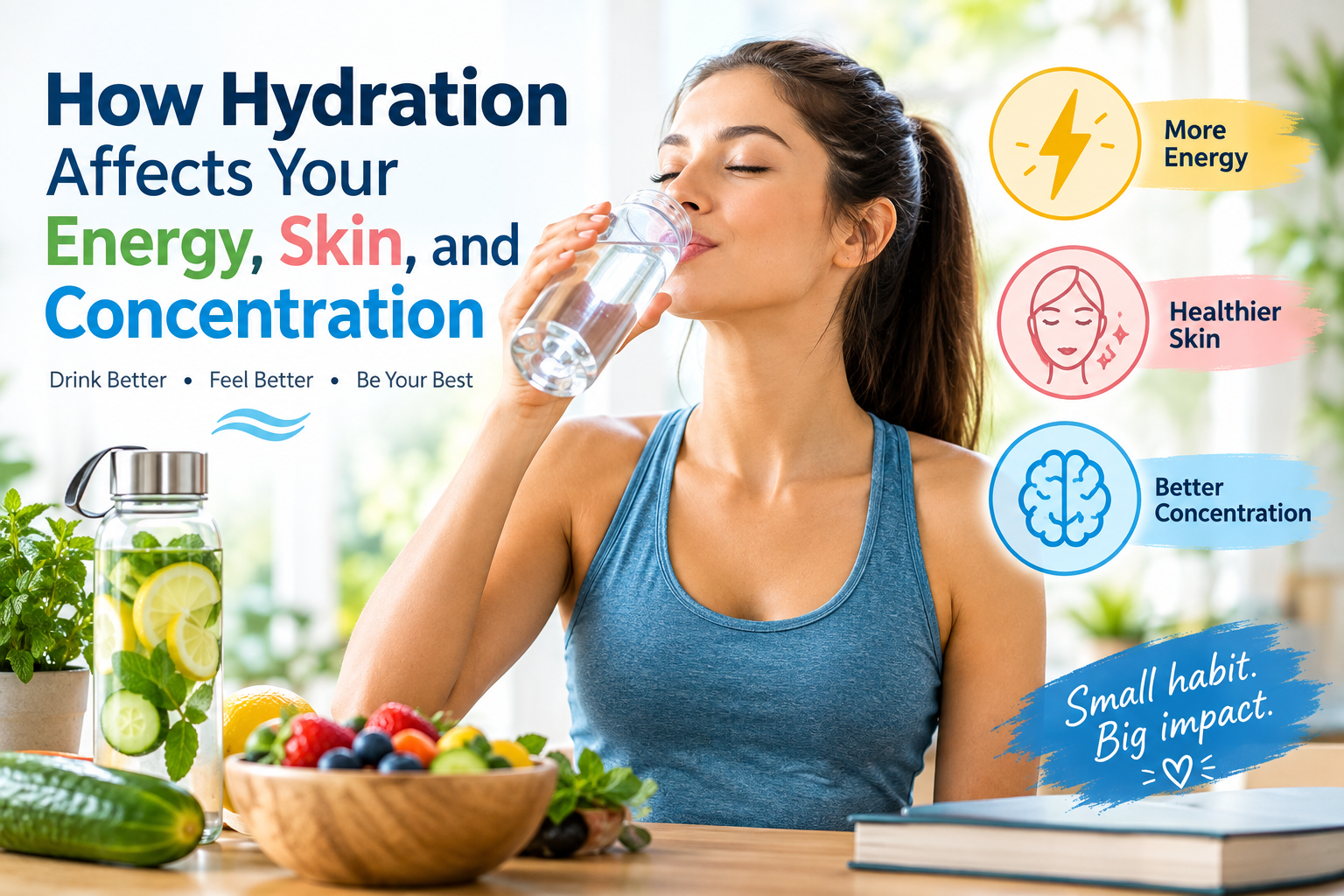


Water is one of the most basic requirements for human life, yet hydration is often one of the easiest aspects of health to overlook. We regularly think about eating nutritious food, exercising, getting enough sleep, and managing stress, but drinking enough fluids deserves the same attention. The body relies on water for an enormous number of everyday processes, from regulating temperature and supporting circulation to transporting nutrients and removing waste.
Hydration can also influence how you feel and function throughout the day. When your body does not receive enough fluids, you may experience thirst, tiredness, headaches, dry mouth, dizziness, or difficulty concentrating. Physical activity and hot weather can increase fluid losses, making hydration even more important.
The relationship between hydration and skin health is also widely discussed. While drinking water is not a cure for acne, wrinkles, or every type of dry skin, adequate fluid intake supports normal physiological function and can help prevent dehydration-related discomfort.
Understanding how hydration affects energy, skin, concentration, physical performance, digestion, and overall well-being can help you develop simple habits that support your health every day.
Why Water Is Essential for the Human Body
Water is present throughout the body and is essential for the normal functioning of cells, tissues, organs, and bodily fluids. Blood contains a large amount of water, while cells require water for many biochemical reactions.
One of its most important roles is temperature regulation. The body produces heat during normal metabolism and physical activity. When body temperature rises, sweating allows heat to leave the body as sweat evaporates from the skin.
Water also supports digestion and helps maintain normal bowel function. It contributes to saliva and digestive fluids and helps move nutrients through the digestive system.
The kidneys depend on adequate fluid availability to produce urine and eliminate metabolic waste. Water also helps maintain normal blood volume and supports circulation.
Because the body continuously loses water through urine, breathing, sweat, and other processes, hydration is an ongoing need rather than something that can be addressed once a day.
This is why drinking fluids regularly is such a fundamental part of maintaining normal body function.
Hydration and Your Energy Levels ⚡
One of the most noticeable effects of inadequate hydration can be a feeling of tiredness or reduced physical capacity.
Fatigue can have many causes. Poor sleep, stress, insufficient food intake, illness, lack of physical activity, and excessive workload can all make you tired. However, dehydration can also contribute to feelings of weakness and reduced performance.
As the body loses fluid, physiological changes can occur that make physical activity feel more difficult. If you are exercising or working outdoors in hot weather, the effects can become more noticeable because sweating increases fluid loss.
Imagine trying to complete a workout after spending several hours in the heat without drinking enough. Your body has to regulate temperature while also supporting your muscles and cardiovascular system. The activity may feel harder than usual.
Adequate hydration can therefore be an important component of maintaining physical comfort and performance.
However, drinking water should not be viewed as a substitute for proper sleep or nutrition. If you are consistently exhausted despite maintaining good hydration, it is worth considering other lifestyle factors or discussing persistent fatigue with a healthcare professional.
Can Dehydration Affect Concentration? 🧠
The brain depends on a stable internal environment to function effectively. Changes in hydration status can influence how you feel mentally and physically.
When you are inadequately hydrated, you may notice symptoms such as headache, irritability, tiredness, or difficulty maintaining attention. These effects can be particularly frustrating when you are trying to study, work, read, or complete tasks that require sustained concentration.
For students, professionals, drivers, and people who spend long hours in front of computers, maintaining adequate fluid intake can be a simple part of a productive routine.
Consider keeping water within reach while studying or working. Rather than waiting until you feel extremely thirsty, take occasional drinks throughout the day.
Hydration alone will not transform concentration. Mental performance also depends on adequate sleep, nutritious food, physical activity, stress management, and appropriate breaks. Nevertheless, avoiding dehydration removes one potential source of physical discomfort that can interfere with your ability to focus.


The Connection Between Hydration and Skin Health ✨
Healthy skin depends on numerous factors, including genetics, age, environmental exposure, nutrition, skincare practices, sleep, and overall health.
Hydration is another part of this picture.
When the body is dehydrated, the skin may appear less plump or feel dry and uncomfortable. Maintaining adequate fluid intake supports the body’s normal processes, but it is important to understand that simply drinking large amounts of water does not automatically eliminate wrinkles, acne, pigmentation, or other dermatological conditions.
Skin hydration is also influenced by the outermost layer of the skin and its ability to retain water. Moisturizers can help reduce water loss from the skin’s surface, while sunscreen helps protect against ultraviolet radiation.
For this reason, a good approach to skin health combines adequate hydration with a balanced diet, regular sleep, sun protection, gentle skincare, and healthy lifestyle habits.
Water is important, but it is only one part of the skin-health equation.
Does Drinking More Water Give You Better Skin?
This is a common question.
If someone is dehydrated, correcting that dehydration can improve overall comfort and may reduce signs associated with inadequate fluid intake. But there is limited reason to believe that drinking excessive amounts of water beyond your body’s needs will produce dramatically clearer or younger-looking skin.
Skin appearance is influenced by many factors.
For example, prolonged sun exposure can contribute significantly to premature skin aging. Smoking, poor sleep, environmental conditions, genetics, and certain medical conditions can also affect the appearance of the skin.
Instead of focusing on drinking excessive quantities of water, focus on maintaining normal hydration while following a comprehensive skincare routine.
That means drinking according to your body’s needs, eating nutrient-rich foods, using sunscreen, moisturizing when appropriate, and seeking professional advice for persistent skin problems.
Hydration and Physical Performance 🏃
Exercise increases fluid requirements because physical activity generates heat and often causes sweating.
The amount of fluid a person loses during exercise varies considerably. Factors include exercise intensity, workout duration, temperature, humidity, clothing, fitness level, and individual sweat rate.
During a short and moderate workout, many healthy adults can maintain hydration by drinking according to thirst.
Longer workouts or strenuous exercise in hot environments can produce much greater fluid losses. In these circumstances, paying closer attention to hydration becomes particularly important.
Before exercise, drinking fluids can help you begin your workout adequately hydrated. During prolonged activity, replacing some of the fluid you lose can help maintain performance. After exercise, fluids combined with a nutritious meal can help support recovery.
People participating in endurance sports or exercising for extended periods may require a more individualized hydration and electrolyte strategy.
Why Hot Weather Increases the Need for Hydration ☀️
Climate has a major influence on hydration.
When temperatures rise, the body uses sweating to help maintain a safe internal temperature. The more you sweat, the more fluid you lose.
People living in hot or humid environments may therefore need to pay particular attention to hydration.
Outdoor workers, athletes, travelers, and people spending extended periods outside may be especially vulnerable to fluid loss.
Hot weather can also reduce appetite or make people less aware of how much fluid they have consumed. Keeping water easily accessible can make it easier to drink regularly.
However, hydration should not mean forcing down excessive quantities of water. The goal is to replace normal fluid losses and maintain a healthy balance.
Hydration and Headaches 🤕
Headaches can have many different causes, including stress, sleep deprivation, eye strain, illness, hormonal changes, caffeine withdrawal, and dehydration.
For some people, inadequate fluid intake can contribute to headaches. If you have spent hours in a hot environment, exercised heavily, or consumed very little fluid, dehydration may be one factor worth considering.
Drinking fluids may help when dehydration is contributing to the problem.
However, recurring headaches should not automatically be attributed to a lack of water. If headaches are frequent, unusually severe, suddenly different, or accompanied by symptoms such as confusion, weakness, fainting, vision problems, or difficulty speaking, medical evaluation is important.
Hydration can be part of headache prevention, but it should not replace appropriate medical assessment.
The Importance of Hydration for Digestion
Water plays an important role in digestive health.
Adequate fluid intake contributes to normal digestion and helps support regular bowel movements. Water works together with dietary fiber to help maintain healthy bowel function.
If your diet contains plenty of fiber but your fluid intake is inadequate, you may find it more difficult to maintain regular bowel movements.
Good hydration habits can therefore complement a diet rich in fruits, vegetables, whole grains, legumes, nuts, and seeds.
Digestive health also depends on overall dietary quality, physical activity, sleep, and individual health conditions.
If constipation is persistent or accompanied by blood in the stool, severe abdominal pain, unexplained weight loss, or other concerning symptoms, medical advice should be sought.
Water and Kidney Function
The kidneys continuously filter the blood and help remove waste products through urine. Adequate fluid availability supports this process.
Urine concentration changes depending on hydration status. When you drink less, urine generally becomes more concentrated.
However, the idea that everyone should drink a fixed, very large quantity of water every day is misleading. Individual fluid needs vary.
Some people may need more fluids because of exercise, hot weather, illness, pregnancy, or other circumstances. Others may have medical conditions requiring fluid restrictions.
People with kidney, heart, or other conditions that affect fluid balance should follow their healthcare professional’s specific recommendations rather than adopting a generic hydration target.


How Much Water Should You Drink?
There is no universal number that applies perfectly to every individual.
Fluid requirements depend on factors such as:
- Body size
- Physical activity
- Climate
- Diet
- Age
- Pregnancy or breastfeeding
- Illness
- Sweating
- Medications
- Individual health conditions
Total fluid intake also comes from food. Fruits and vegetables can contain substantial amounts of water, as can foods such as soups and yogurt.
Rather than becoming obsessed with a particular number, develop consistent hydration habits and pay attention to thirst and other signals from your body.
Urine color can sometimes provide a rough indication of hydration, although it is affected by certain foods, supplements, medications, and health conditions.
The key is balance.
Can You Get Hydrated Through Food? 🍉
Absolutely.
Drinking water is not the only way to consume fluids. Many foods naturally contain significant amounts of water.
Water-rich foods include fruits such as watermelon, oranges, strawberries, grapes, and melons. Vegetables such as cucumber, tomatoes, lettuce, and zucchini can also contribute to daily fluid intake.
Soups and other liquid-based foods can contribute as well.
Eating a varied diet rich in fruits and vegetables therefore supports hydration alongside providing fiber, vitamins, minerals, and other nutrients.
This does not mean you should replace drinking water with food. Instead, think of hydration as coming from your overall diet and beverage choices.
Water, Coffee, and Tea ☕
Many people believe that coffee and tea automatically dehydrate the body.
The reality is more nuanced.
Caffeinated beverages can contribute to daily fluid intake. Regular consumers of caffeine generally develop some tolerance to its diuretic effects, meaning moderate amounts of caffeinated beverages can contribute to hydration.
However, very high caffeine consumption can cause unwanted effects in some people, including anxiety, restlessness, rapid heartbeat, and sleep disruption.
Sleep is directly connected with energy and concentration, so excessive caffeine can indirectly undermine the benefits you are trying to achieve through better hydration.
Water remains a simple everyday choice, but moderate coffee or tea consumption can also contribute to total fluid intake for many people.
Alcohol and Hydration 🍷
Alcohol deserves special consideration.
Alcohol can increase urine production and contribute to fluid loss. Drinking alcohol can therefore make it easier to become dehydrated, especially when combined with hot weather, sweating, vomiting, or insufficient fluid intake.
If you consume alcohol, drinking water alongside it can help maintain fluid intake. However, water does not eliminate the health risks associated with excessive alcohol consumption.
Limiting alcohol remains an important part of a healthy lifestyle.
Signs That You May Be Dehydrated
Your body can provide several clues when fluid intake is insufficient.
Possible signs include thirst, dry mouth, darker urine, tiredness, headache, dizziness, weakness, and reduced physical performance.
More serious dehydration can cause confusion, fainting, rapid heartbeat, or other significant symptoms.
Certain groups may be particularly vulnerable, including young children, older adults, endurance athletes, people working in hot environments, and people experiencing vomiting or diarrhea.
Severe dehydration can be a medical emergency.
If someone is confused, fainting, extremely weak, or unable to keep fluids down, prompt medical attention is important.
Simple Ways to Drink More Water Every Day 💧
Staying hydrated does not need to be complicated.
One of the easiest strategies is to keep water nearby. A reusable bottle on your desk, in your bag, or beside you during exercise can make drinking more convenient.
You can also connect hydration to existing habits. Drink water with meals, after waking up, before leaving home, or during regular work breaks.
If you dislike plain water, try adding natural flavor through lemon, lime, cucumber, mint, or fruit.
Another helpful approach is to eat more water-rich foods.
The goal is not to constantly think about water. Instead, create a routine where hydration naturally becomes part of your day.
Hydration During Exercise
Before exercising, consider drinking enough fluids to avoid beginning your workout thirsty.
During exercise, especially in warm conditions, drink according to your thirst and the intensity and duration of your activity.
For prolonged or high-intensity exercise, fluid and electrolyte losses may become significant. Sports nutrition strategies can be useful for endurance athletes and people exercising for extended periods.
After exercising, replace fluids lost through sweating and consume a balanced meal or snack.
Remember that hydration requirements differ between individuals. A person doing a 30-minute indoor workout will generally have different fluid needs from someone running outdoors for several hours.
Hydration for Students and Office Workers 📚
Long periods of studying or working can make people forget to drink.
This is particularly common when someone becomes deeply focused on a task.
A simple solution is to keep a bottle of water on the desk.
Taking occasional water breaks can also encourage you to stand up, stretch, look away from your screen, and reset your attention.
For students, drinking enough fluids can be incorporated into study sessions. For example, keep water beside your books or laptop and take regular breaks between study blocks.
Hydration is not a replacement for proper study techniques, sleep, or nutrition, but it can support general physical comfort while you work.
Hydration and Morning Energy 🌅
Some people wake up feeling thirsty after several hours without drinking.
Starting the morning with water can be a simple way to replenish fluids.
However, water is not a magical energy drink. If you wake up consistently exhausted, the bigger issue may be inadequate sleep, irregular sleep schedules, stress, nutritional deficiencies, illness, or another underlying factor.
A healthy morning routine can combine hydration with sunlight exposure, movement, a nutritious breakfast when appropriate, and a consistent sleep schedule.
Why You Should Not Overdrink Water
While dehydration can be harmful, drinking excessive amounts of water can also be dangerous.
Consuming extremely large quantities of water in a short period can dilute sodium levels in the blood, potentially causing a condition known as hyponatremia.
Symptoms can include nausea, headache, confusion, seizures, and in severe cases, life-threatening complications.
This is why hydration is about balance rather than simply maximizing water consumption.
Do not force yourself to drink enormous amounts of water simply because you believe more is healthier.
People with certain medical conditions may also have specific fluid restrictions, so individualized medical guidance is important.
Building a Healthy Hydration Routine 🌱
A sustainable hydration routine can be surprisingly simple.
Start by keeping water accessible. Drink when you are thirsty and increase fluid intake when circumstances cause greater losses, such as exercise or hot weather.
Include water-rich fruits and vegetables in your diet.
Choose water more often instead of sugary beverages.
Use a reusable bottle if that makes it easier to monitor your drinking habits.
Pay attention to how you feel during the day.
Most importantly, avoid turning hydration into an extreme goal. You do not need to constantly measure every sip to support your health.
Consistency matters more than perfection.
Hydration Is Only One Part of Healthy Living
It is easy to overestimate the effect of any single health habit.
Drinking adequate water is important, but it cannot compensate for consistently poor sleep, an unbalanced diet, physical inactivity, chronic stress, or excessive alcohol consumption.
Think of hydration as one piece of a much larger health puzzle.
A healthy lifestyle generally includes nutritious food, regular movement, sufficient sleep, stress management, social connection, preventive healthcare, and healthy hydration.
When these habits work together, they can provide a much stronger foundation for long-term well-being.
Final Thoughts
Hydration affects far more than thirst. Water supports circulation, temperature regulation, digestion, kidney function, physical performance, and many other essential processes.
Inadequate hydration can contribute to fatigue, headaches, dizziness, and difficulty concentrating. It can also make physical activity more challenging and contribute to feelings of dryness and discomfort.
When it comes to skin health, hydration is helpful but should not be treated as a miracle solution. Healthy skin depends on multiple factors, including nutrition, sun protection, skincare, sleep, genetics, and overall health.
The best hydration strategy is simple: drink fluids regularly, respond to thirst, replace fluids lost through exercise or heat, eat water-rich foods, and avoid extreme overconsumption.
You do not need an elaborate routine to make hydration part of a healthier lifestyle. Keeping a bottle of water nearby, drinking with meals, eating more fruits and vegetables, and paying attention to your body’s signals can go a long way.
Ultimately, good hydration is not about drinking as much water as possible. It is about giving your body an appropriate amount of fluid so that it can perform the everyday functions that keep you feeling and functioning at your best. 💧🌿