
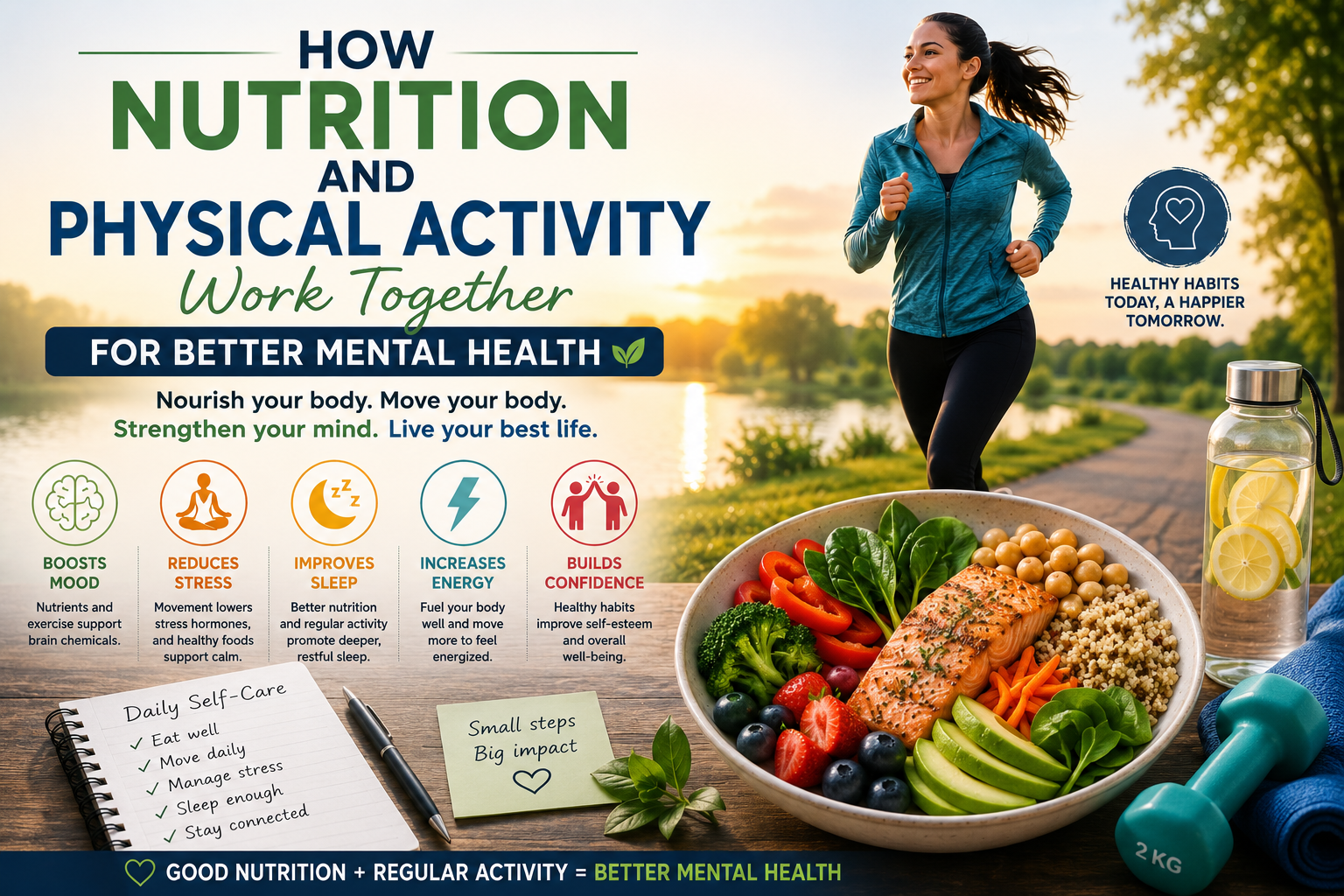
Mental health is an essential part of overall well-being. The way we think, feel, manage stress, build relationships, and respond to life’s challenges can all influence our quality of life. While professional mental healthcare is important and sometimes necessary, everyday lifestyle habits can also play a valuable supporting role. Two of the most important habits are nutrition and physical activity. 🥗💪
These two areas are often discussed separately. Nutrition is usually associated with weight management and physical health, while exercise is commonly linked with strength, fitness, and cardiovascular health. However, both can also influence factors connected with mental well-being, including energy levels, sleep, stress management, physical health, and social engagement.
The relationship is not as simple as eating one particular food or completing one workout. Mental health is complex and influenced by genetics, life experiences, relationships, environment, financial circumstances, and many other factors. However, building healthy habits around food and movement may help create a stronger foundation for overall well-being. 🌿
Let’s explore how nutrition and physical activity can work together to support better mental health.
🌱 Understanding the Connection Between Lifestyle and Mental Health
The mind and body are deeply connected. What happens physically can influence how we feel emotionally, and our mental state can also influence physical habits.
For example:
😟 Stress may affect appetite.
😴 Poor sleep may reduce motivation to exercise.
🍔 Unhealthy eating patterns may leave some people feeling low in energy.
🏃 Regular movement may improve energy and support better sleep.
🥗 Nutritious meals may provide the energy needed for physical activity.
These relationships can create either positive or negative cycles.
A person experiencing stress may sleep poorly, exercise less, and rely more heavily on convenient foods. Over time, these habits may make it more difficult to maintain a healthy routine.
On the other hand, small positive changes can also work together.
A nutritious meal may provide energy for a walk. 🚶
A walk may help someone relax. 🌳
Regular movement may support better sleep. 😴
Better sleep may make it easier to prepare nutritious meals the next day. 🥗
This interconnected approach is one reason lifestyle habits can be so important.
🥗 The Role of Nutrition in Mental Well-Being
The brain is an extremely active organ that requires a continuous supply of energy and nutrients.
A balanced diet can include:
🥬 Vegetables
🍎 Fruits
🌾 Whole grains
🫘 Beans and legumes
🥜 Nuts and seeds
🐟 Fish and other protein sources
🥑 Foods containing healthy fats
These foods provide a variety of nutrients needed for normal body functions.
Nutrition does not guarantee perfect mental health, but a consistently balanced eating pattern can support overall physical health, which is closely connected to psychological well-being.
The focus should be on overall dietary patterns rather than searching for one magical food.
🧠 1. Food Provides Energy for the Brain and Body
The food we eat provides energy for everyday activities.
The brain requires a constant supply of energy, while muscles need fuel to support movement and exercise.
Meals that contain a combination of:
🌾 Complex carbohydrates
💪 Protein
🥑 Healthy fats
🥬 Fiber-rich foods
may help create balanced and satisfying eating patterns.
For example, a meal containing vegetables, whole grains, and a protein source can provide a different nutritional profile than a meal made primarily from highly processed ingredients.
Regular meals may also help some people avoid becoming excessively hungry, which can affect energy and mood.
The goal isn’t perfection. It is consistency and balance. 🌱
🏃 The Role of Physical Activity in Mental Health
Physical activity is another important part of a healthy lifestyle.
Movement can take many forms:
🚶 Walking
🏃 Running
🚴 Cycling
🏊 Swimming
💃 Dancing
🧘 Yoga
🏋️ Strength training
🌳 Gardening
You don’t need to become an athlete to experience the benefits of regular movement.
Even moderate and enjoyable activities can become meaningful parts of a healthy routine.
Physical activity may support mental well-being through several pathways, including stress management, sleep, social interaction, and improved physical fitness.
⚡ 2. Exercise Can Support Energy and Confidence
Regular physical activity can improve fitness and make everyday movement easier.
As people become stronger or improve their endurance, they may notice progress in activities that once felt difficult.
For example:
Week One: A ten-minute walk feels challenging. 🚶
Several Weeks Later: A longer walk feels more manageable. 🌳
This progress can create a sense of achievement.
Setting and reaching realistic goals may help build:
✨ Confidence
🎯 Motivation
💪 Self-efficacy
🌱 A sense of progress
The goal isn’t to compete with everyone else.
Your personal journey matters most.
🔄 How Nutrition and Exercise Work Together
Nutrition and physical activity are not separate parts of health.
They interact constantly.
Think of your body like a complex system.
🍽️ Nutrition provides fuel and essential nutrients.
🏃 Physical activity challenges and strengthens the body.
😴 Recovery allows the body to rest.
🧠 Together, these processes can influence overall well-being.
Someone who eats well but rarely moves may miss some benefits of physical activity.
Someone who exercises regularly but consistently eats an inadequate diet may struggle to support energy and recovery.
A balanced approach can be more sustainable.
🥣 3. Good Nutrition Can Support Physical Activity
Exercise requires energy.
People who are physically active need adequate nutrition to support their lifestyle.
For example:
Before Activity ⚡
A balanced snack may provide energy.
Possible options include:
🍌 Banana with nuts
🥣 Oats with fruit
🍞 Whole-grain toast
🥛 Yogurt with fruit
After Activity 💪
A balanced meal containing protein and carbohydrates can support normal recovery and replenish energy.
Examples include:
🍛 Lentils with rice and vegetables
🥚 Eggs with whole-grain bread
🐟 Fish with vegetables and grains
🫘 Beans with a nutritious carbohydrate source
Individual nutritional needs vary depending on age, activity level, health conditions, and other factors.
😌 4. Exercise Can Be a Powerful Stress-Management Tool
Stress is a normal part of life, but chronic or overwhelming stress can affect both physical and emotional health.
Physical activity can provide an opportunity to:
🌿 Step away from daily pressures
🧠 Focus attention on the present moment
🌳 Spend time outdoors
💪 Release physical tension
👥 Connect with others
A walk after a difficult day can become a simple transition between work and personal time.
Yoga or stretching may help some people create a sense of calm.
A group exercise class may combine movement with social interaction.
The best activity is often one you genuinely enjoy.
😴 5. Nutrition, Exercise, and Sleep Form an Important Triangle
Sleep is another essential part of mental well-being.
Poor sleep can affect:
🧠 Concentration
😟 Emotional regulation
⚡ Energy
🎯 Motivation
At the same time, stress and anxiety can interfere with sleep.
Nutrition and physical activity may both influence sleep patterns.
For many people, regular movement can support healthy sleep. A balanced diet and regular eating routine may also contribute to overall health.
These three factors—nutrition, exercise, and sleep—often influence one another.
🏃 Physical activity can support healthy sleep.
😴 Good sleep can improve energy for exercise.
🥗 Good nutrition can support both energy and recovery.
Creating balance between these habits may be more beneficial than focusing exclusively on one.
🦠 6. The Gut-Brain Connection
Scientists are increasingly interested in the relationship between the digestive system and the brain.
This communication network is often called the gut-brain axis. 🧠↔️🦠
Dietary patterns may influence the gut microbiome, while physical activity may also have effects on different systems throughout the body.
Foods commonly associated with healthy dietary patterns include:
🥬 Vegetables
🍎 Fruits
🌾 Whole grains
🫘 Legumes
🥜 Nuts and seeds
These foods can provide dietary fiber and other nutrients.
Research into the gut-brain relationship continues to develop, and there is still much to learn.
People should be cautious about claims that one specific food, probiotic, or supplement can instantly transform mental health.
The human body is far more complex.
👥 7. Physical Activity Can Create Social Connections
Mental well-being is influenced by relationships and social support.
Some forms of physical activity naturally bring people together.
Examples include:
🚶 Walking groups
💃 Dance classes
🏋️ Group fitness sessions
⚽ Recreational sports
🧘 Yoga communities
🌳 Community activities
Social exercise can make movement more enjoyable and provide additional motivation.
Instead of viewing exercise as another task, it can become an opportunity to connect with other people.
Human connection and movement can be a powerful combination. ❤️
🥦 8. Healthy Food Can Support Daily Routines
Preparing nutritious meals can also create structure.
A regular routine might include:
🌅 Preparing breakfast
🍛 Taking a lunch break
🥗 Cooking a balanced dinner
These routines can provide opportunities to slow down and care for yourself.
Food is also connected to:
👨👩👧 Family
🌍 Culture
❤️ Tradition
🎉 Celebration
🍽️ Social connection
Healthy eating does not mean removing enjoyment from food.
A sustainable approach includes both nutrition and pleasure.
🧘 9. Mind-Body Activities Combine Movement and Mental Awareness
Some activities combine physical movement with breathing and focused attention.
Examples include:
🧘 Yoga
☯️ Tai chi
🌿 Qigong
🚶 Mindful walking
These activities may be particularly appealing to people who want a slower and more reflective approach to exercise.
The combination of movement and focused attention can become part of a broader stress-management routine.
However, no single exercise works for everyone.
Experimenting with different activities can help you discover what feels enjoyable and sustainable.
🍽️ 10. A Balanced Approach Is Better Than Extreme Rules
Many people believe healthy living requires strict rules.
For example:
❌ Never eat dessert.
❌ Exercise for hours every day.
❌ Remove every favorite food.
❌ Follow a complicated diet.
These approaches can be difficult to maintain.
In some cases, overly restrictive habits may even increase stress.
A healthier approach may involve flexibility.
🥗 Eat nutritious foods most of the time.
🍫 Enjoy favorite foods occasionally.
🏃 Move your body regularly.
😴 Make time for rest.
👥 Stay connected with supportive people.
Healthy living should support your life—not make life feel like a constant test.
📅 11. A Simple Daily Routine for Mind and Body
Here is one example of how nutrition and physical activity could fit into an ordinary day.
🌅 Morning
💧 Drink water.
🥣 Eat a balanced breakfast.
🚶 Take a short walk or perform gentle stretches.
☀️ Afternoon
🍛 Eat a balanced lunch.
🏃 Take movement breaks.
🧠 Step away from screens occasionally.
🌤️ Evening
🌳 Go for a walk or exercise.
🥗 Prepare a balanced meal.
👨👩👧 Spend time with family or friends.
🌙 Night
📵 Reduce unnecessary screen exposure.
🧘 Practice gentle relaxation.
😴 Follow a consistent sleep routine.
This is only an example. The best routine is one that fits your lifestyle.
🌱 12. Small Changes Can Create Long-Term Habits
You don’t need to change everything at once.
Small changes can be easier to maintain.
Try:
🥦 Adding one extra vegetable to dinner.
🚶 Taking a ten-minute walk.
🍎 Choosing fruit for a snack.
💪 Performing simple strength exercises.
💧 Drinking more water.
😴 Going to bed slightly earlier.
Over time, these small actions can become habits.
Consistency is often more important than intensity.
A ten-minute walk completed regularly may be more sustainable than an intense workout performed once every few months.
⚠️ Mental Health Requires a Comprehensive Approach
Nutrition and physical activity can be valuable tools, but they are not substitutes for professional mental healthcare.
A person can:
🥗 Eat nutritious food
🏃 Exercise regularly
😴 Sleep well
…and still experience anxiety, depression, or other mental health challenges.
Mental health conditions are not personal failures.
They can have complex causes and may require professional treatment.
If you experience persistent symptoms that interfere with work, relationships, sleep, or daily activities, consider speaking with a qualified healthcare or mental health professional.
Urgent help is important if you are experiencing thoughts of harming yourself or are in immediate danger. ❤️
🌟 10 Practical Tips for Combining Nutrition and Physical Activity
1️⃣ Start With Small Changes
Don’t try to transform your entire lifestyle overnight.
2️⃣ Choose Enjoyable Activities
Walking, dancing, swimming, and cycling are all valid options.
3️⃣ Build Balanced Meals
Include vegetables, protein, healthy fats, and nutritious carbohydrate sources.
4️⃣ Stay Hydrated
Pay attention to your fluid intake.
5️⃣ Prepare Food in Advance
Simple meal preparation can make healthy choices easier.
6️⃣ Move Throughout the Day
Physical activity does not need to happen only at the gym.
7️⃣ Don’t Forget Strength Training
Building and maintaining strength can support overall health.
8️⃣ Make Time for Recovery
Rest is an essential part of physical and mental well-being.
9️⃣ Exercise With Others
Social support can increase enjoyment and motivation.
🔟 Focus on Progress, Not Perfection
Small improvements are still improvements.
🧩 Final Thoughts: A Stronger Foundation for Mental Well-Being
Nutrition and physical activity are two important lifestyle habits that can work together to support overall health and mental well-being. 🧠💚
Nutritious foods provide the energy and nutrients needed to support the body, while regular movement can improve physical fitness and contribute to stress management, sleep, confidence, and social connection.
The greatest benefits may come from recognizing how these habits interact.
🥗 Better nutrition can support energy for movement.
🏃 Regular physical activity can become a healthy way to manage stress.
😴 Improved routines can support better sleep.
🌿 Better sleep can make it easier to maintain healthy habits.
The goal is not to create a perfect lifestyle.
You don’t need the perfect diet.
You don’t need the perfect workout.
You don’t need to change everything today.
Start with one nutritious meal. 🥗
Take one walk. 🚶
Drink a glass of water. 💧
Stretch for a few minutes. 🧘
Then repeat those positive choices over time.
When nutrition, physical activity, rest, and appropriate mental health support work together, they can help create a stronger foundation for a healthier body, a calmer mind, and a more balanced life. 🌱🧠💪