
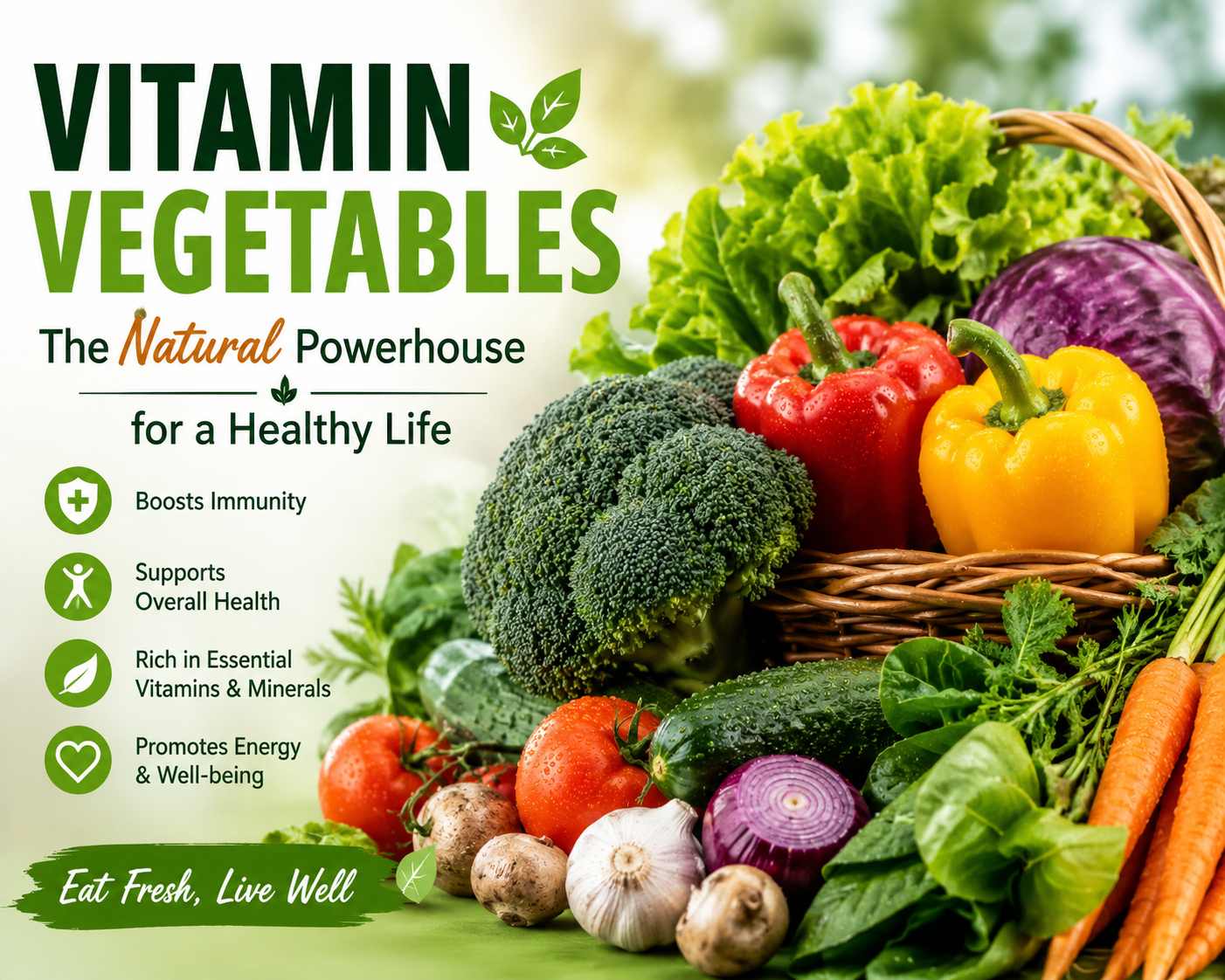
Vegetables are among the most powerful foods on Earth. They are rich in vitamins, minerals, antioxidants, fiber, and plant compounds that help the body function at its best. A diet rich in vitamin vegetables can improve immunity, enhance skin health, support brain function, and even prevent chronic diseases.
In today’s fast-paced world, many people rely on processed foods, leading to vitamin deficiencies and health issues. Adding a variety of colorful vegetables to your daily diet is one of the simplest and most effective ways to restore balance and energy naturally.
This blog will guide you through vitamin-rich vegetables, their benefits, how they work in the body, and how to include them in your daily meals.
🥕 What Are Vitamin Vegetables?
Vitamin vegetables are vegetables that are naturally rich in essential vitamins such as:
- Vitamin A
- Vitamin B Complex
- Vitamin C
- Vitamin E
- Vitamin K
These vitamins are crucial for maintaining immunity, energy production, bone strength, skin repair, and organ function.
Unlike supplements, vegetables provide vitamins in their natural form along with fiber and phytonutrients, making them more effective and easier for the body to absorb.
🧡 Vitamin A Vegetables: For Eyes, Skin, and Immunity


Vitamin A is essential for good vision, healthy skin, and a strong immune system. It helps the eyes adjust in low light and supports cell growth.
🥕 Best Vitamin A Vegetables:
- Carrots
- Sweet potatoes
- Spinach
- Pumpkin
- Kale
🌟 Benefits:
- Improves night vision
- Keeps skin glowing
- Strengthens immunity
- Supports growth and development
Carrots are especially famous for their beta-carotene content, which the body converts into vitamin A. Regular consumption can help reduce the risk of eye-related disorders.
🍊 Vitamin C Vegetables: Immunity Booster


Vitamin C is a powerful antioxidant that helps protect the body from infections and speeds up healing. It also plays a major role in collagen production, which keeps skin firm and youthful.
🌶️ Best Vitamin C Vegetables:
- Bell peppers
- Broccoli
- Cauliflower
- Tomatoes
- Cabbage
🌟 Benefits:
- Strengthens immune system
- Heals wounds faster
- Improves skin texture
- Reduces inflammation
Red bell peppers contain more vitamin C than oranges, making them one of the most powerful immune-boosting vegetables.
🥬 Vitamin K Vegetables: Strong Bones and Healthy Blood


Vitamin K is important for blood clotting and bone health. Without it, the body would struggle to heal wounds properly.
🥗 Best Vitamin K Vegetables:
- Spinach
- Kale
- Lettuce
- Brussels sprouts
- Broccoli
🌟 Benefits:
- Helps blood clot properly
- Strengthens bones
- Supports heart health
- Improves calcium absorption
Leafy greens are the richest sources of vitamin K and should be included daily in salads or cooked meals.
🌽 Vitamin B Complex Vegetables: Energy & Brain Function


Vitamin B complex includes several vitamins that help convert food into energy. They also support brain function and nerve health.
🥔 Best Vitamin B Vegetables:
- Peas
- Potatoes
- Mushrooms
- Corn
- Spinach
🌟 Benefits:
- Boosts energy levels
- Improves brain function
- Supports nervous system
- Reduces fatigue
These vegetables are especially important for people with busy lifestyles or high physical activity.
🥑 Vitamin E Vegetables: Skin Protection & Antioxidant Power


Vitamin E is a strong antioxidant that protects body cells from damage caused by free radicals. It is also known for improving skin health.
🥬 Best Vitamin E Vegetables:
- Avocado
- Spinach
- Broccoli
- Asparagus
- Beet greens
🌟 Benefits:
- Protects skin from aging
- Improves cell health
- Supports immunity
- Reduces oxidative stress
Avocado is one of the richest vegetable sources of vitamin E and healthy fats.
🥗 Why You Should Eat Vitamin Vegetables Daily
Eating a variety of vitamin vegetables every day provides numerous health benefits:
💪 1. Strong Immunity
Vitamins A and C help your body fight infections and stay healthy.
🧠 2. Better Brain Function
Vitamin B supports memory, focus, and energy levels.
❤️ 3. Heart Health
Leafy greens and antioxidant-rich vegetables reduce cholesterol and improve circulation.
🌿 4. Healthy Skin & Hair
Vitamins A and E promote glowing skin and strong hair.
🦴 5. Strong Bones
Vitamin K helps your bones stay strong and reduces fracture risk.
🌈 The “Rainbow Plate” Rule
Eating vegetables of different colors ensures you get a wide range of vitamins.
- 🟢 Green → Spinach, broccoli, kale
- 🟠 Orange → Carrot, pumpkin, sweet potato
- 🔴 Red → Tomatoes, red peppers
- 🟣 Purple → Beetroot, eggplant
- ⚪ White → Cauliflower, garlic
Each color represents different nutrients, so variety is key.
🥦 Easy Ways to Add Vitamin Vegetables to Your Diet
You don’t need complicated recipes. Here are simple ways to eat more vegetables:
🥗 Salads
Mix raw vegetables with olive oil and lemon.
🍲 Soups
Add spinach, carrots, and broccoli to soups.
🍛 Curries
Cook vegetables with spices for daily meals.
🥤 Smoothies
Blend spinach or kale with fruits.
🍕 Snacks
Roasted vegetables make a healthy snack alternative.
⚠️ Common Mistakes to Avoid
- Overcooking vegetables (reduces vitamin content)
- Eating only one type of vegetable
- Relying on supplements instead of natural food
- Not including raw vegetables in diet
🧾 Final Conclusion
Vitamin vegetables are nature’s most powerful gift for human health. They are not just food—they are medicine that protects your body from diseases, boosts immunity, and improves overall well-being.
A simple habit of eating a variety of colorful vegetables every day can transform your health over time. Instead of depending on processed foods or supplements, returning to natural vitamin-rich vegetables is the best long-term investment in your body.
Start small, stay consistent, and build a “rainbow plate” every day—your body will thank you for years to come. 🌱