
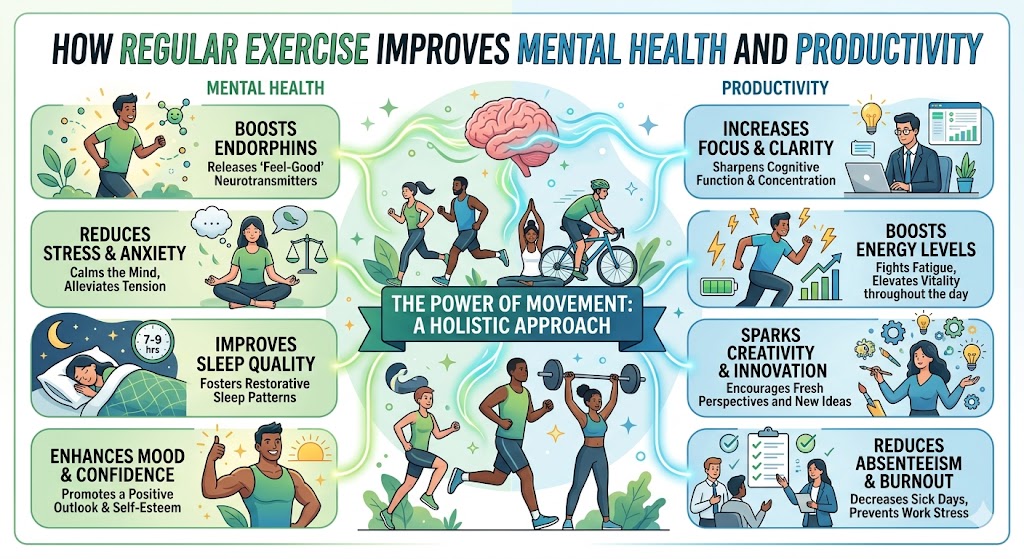
Regular exercise is often associated with physical fitness, but its impact on mental health and productivity is just as powerful. In fact, consistent movement—whether it’s walking, strength training, yoga, or sports—can significantly improve mood, focus, and overall cognitive performance.
1. Exercise and Brain Chemistry
When you engage in regular physical activity, your brain releases chemicals like endorphins, dopamine, and serotonin. These are often called “feel-good” neurotransmitters because they help reduce stress and create a sense of well-being.
Endorphins help reduce pain perception and improve mood, while serotonin plays a key role in stabilizing emotions. This natural chemical boost is one reason people often feel more relaxed and positive after a workout.
2. Reducing Stress and Anxiety
Regular movement is one of the most effective natural stress relievers. Exercise lowers cortisol, the body’s primary stress hormone, and helps regulate the nervous system.
Activities like jogging, swimming, or even brisk walking give the mind a break from overthinking and daily pressure. Over time, this leads to reduced anxiety levels and better emotional resilience when facing challenges.
3. Improved Focus and Cognitive Performance
Exercise increases blood flow and oxygen supply to the brain, which enhances mental clarity and concentration. Studies consistently show that physically active individuals tend to perform better in tasks requiring attention, memory, and decision-making.
Even short sessions of physical activity during the day can help reset mental fatigue, making it easier to stay productive and focused for longer periods.
4. Better Sleep Quality
Poor sleep is closely linked to low productivity and mental fatigue. Regular physical activity helps regulate sleep cycles by balancing energy levels throughout the day.
People who exercise tend to fall asleep faster and enjoy deeper sleep stages. Improved rest directly translates into better mood stability, sharper thinking, and higher productivity the next day.
5. Boosting Motivation and Discipline
Building a consistent exercise routine strengthens self-discipline. When you commit to regular workouts, you train your mind to follow structure and routines, which naturally extends into work and study habits.
This sense of achievement after completing a workout also increases motivation, helping you approach tasks with more confidence and energy.
Conclusion
Regular exercise is not just about physical health—it is a powerful tool for improving mental well-being and productivity. By enhancing brain chemistry, reducing stress, improving focus, and supporting better sleep, physical activity creates a strong foundation for a healthier and more efficient lifestyle.