

Category: Nutrition Research & Heart Health
Salt is an essential part of Indian cooking. It enhances the taste of dal, sabzi, roti, rice, curries, chutneys and snacks. However, the amount of salt we consume every day may be higher than we realize. The reason is not always the salt added while cooking. Hidden salt in pickles, papad, packaged snacks, sauces, instant foods and restaurant meals can contribute substantially to our daily sodium intake.
Excess sodium can cause the body to retain more water and can increase blood pressure in susceptible people. Over time, persistently high blood pressure can raise the risk of heart disease, stroke and kidney problems.
The good news is that reducing salt does not mean giving up traditional Indian food. By understanding where sodium hides, choosing ingredients carefully and using herbs and spices for flavour, you can enjoy familiar meals while supporting your heart health.
1. 🩺 What Is Hidden Salt, and Why Does It Matter?
Hidden salt refers to salt or other sodium-containing ingredients present in food that may not seem particularly salty. Some foods contain sodium naturally, while others acquire it through preservation, seasoning, processing or preparation.
In Indian diets, hidden salt can come from packaged namkeen, biscuits, bread, instant noodles, pickle, papad, ready-made masala mixes, sauces and restaurant gravies. Even when a meal tastes mild, its ingredients may contribute meaningful amounts of sodium.
According to the World Health Organization (WHO), adults should consume less than 2,000 mg of sodium per day, equivalent to less than 5 grams of salt from all sources combined. This is a daily upper limit, not a target that everyone needs to reach.
THE DAILY SALT GUIDELINE
5 g
Salt maximum
2,000 mg
Sodium maximum
WHO recommendation for adults. The limit includes salt used in cooking, at the table and in packaged or prepared foods.
It is important to distinguish salt from sodium. Table salt is sodium chloride and contains approximately 40% sodium by weight. Therefore, 5 grams of salt provides about 2,000 mg of sodium. Food labels generally report sodium, so checking the label helps you understand how much you are consuming.
2. 🍛 Common Indian Foods That Can Contain Hidden Salt
The following foods are everyday examples. Their sodium content varies considerably by recipe, brand, serving size and preparation method.

Pickles (Achar)
Pickles are preserved using salt, oil, spices and sometimes other ingredients. Mango, lemon and mixed vegetable pickles can add considerable sodium even when eaten in small portions.
Try this: Use a small measured serving rather than eating directly from the jar, and choose lower-salt recipes where possible.

Papad
Papad often contains added salt and may be served alongside an already seasoned meal. Roasting instead of frying can reduce added oil, but it does not necessarily reduce the sodium.
Try this: Check the label, limit portions and avoid automatically adding papad to every meal.

Namkeen, Bhujia and Chips
These snacks can contain added salt, flavouring mixtures and other sodium-containing ingredients. Frequent handfuls throughout the day can add up.
Try this: Choose fresh fruit, unsalted roasted chana or plain, unsalted nuts more often.

Bread, Pav and Bakery Products
Bread can contain sodium even when it does not taste salty. Commercial buns, sandwiches, biscuits and savoury bakery products may also contain added salt or raising agents.
Try this: Compare sodium per 100 g between products and consider how many slices or pieces you actually eat.

Instant Noodles and Ready-to-Eat Foods
Seasoning sachets, soup powders, ready-made gravies and packaged meals can contribute sodium through salt, flavour enhancers and sauces.
Try this: Use less seasoning when practical, add fresh vegetables and compare labels before buying.

Restaurant Curries, Chutneys and Sauces
Salt levels can vary between restaurants and recipes. Gravies, soups, chutneys, ketchup and packaged cooking sauces may all contribute to the total.
Try this: Ask for less salt where possible, keep sauces on the side and avoid adding extra table salt before tasting.
India’s National Institute of Nutrition specifically identifies pickles, papads, sauces, ketchup and canned foods as potential contributors to high salt intake.
3. 🧂 How Everyday Indian Meals Can Add Up
Consider a typical day that includes homemade dal and sabzi, roti, a pickle, papad and a packet of namkeen. None of these foods automatically makes the diet unhealthy, but several salty additions can push total sodium intake above recommended levels.
The following table highlights where to pay attention.
| Everyday food | What to watch |
|---|---|
| Dal and sabzi | Salt added during cooking |
| Roti or paratha | Dough salt, plus salted accompaniments |
| Rice | Salt added during cooking or in accompanying dishes |
| Pickle and papad | Preservative salt and added seasoning |
| Tea-time snacks | Namkeen, chips and savoury biscuits |
| Restaurant meals | Salt in gravies, sauces and seasoning |
| Instant foods | Sodium in seasoning sachets and flavourings |
A simple example illustrates why the total matters: a person might use salt in three separate dishes and also eat a pickle, papad and packaged snack. Each addition seems small, but the combined amount may be substantial.
The most useful strategy is to look at the whole day’s diet, rather than blaming one particular food. Homemade food is often easier to control because you can measure the salt used, but homemade meals can also be high in sodium if generous quantities of salt, stock cubes, sauces or salty accompaniments are used.
4. ❤️ How Excess Salt Can Affect Blood Pressure
Sodium helps regulate fluid balance, nerve signals and normal muscle function. The body needs sodium, but consuming too much can disturb the balance between sodium and water.
When sodium intake is high, the body may retain more fluid. This can increase the volume of blood circulating through the blood vessels and raise blood pressure. Over time, sustained high blood pressure places additional strain on the heart, blood vessels and kidneys.
Who may be more sensitive to salt?
Not everyone responds to sodium in the same way. Some people are more salt-sensitive, meaning their blood pressure rises more noticeably when they consume excess sodium. People with hypertension, kidney disease and certain cardiovascular conditions may need particular care with sodium intake.
However, a person should not assume that a salty diet is harmless just because they feel healthy. High blood pressure often has no obvious symptoms, which is why regular blood pressure checks are important.
What are the possible long-term consequences?
High blood pressure
Excess sodium can contribute to elevated blood pressure, increasing cardiovascular strain.
Heart disease and stroke
Persistently high blood pressure is a major risk factor for heart attacks, strokes and other cardiovascular complications.
Kidney strain
High blood pressure can damage the kidneys over time, while kidney disease can also make sodium and fluid balance more difficult.
These risks relate to long-term dietary patterns and individual health, not to eating one salty meal occasionally. Reducing excess sodium is a practical preventive step.
5. 🔍 How to Identify Hidden Sodium on Food Labels
Food labels can help you make better choices, especially when comparing packaged snacks, bread, sauces, instant noodles and ready-to-eat meals.
First, look for the sodium content per 100 grams or per serving. Then check the serving size. A packet may contain more than one serving, so eating the entire packet could provide more sodium than the label’s single-serving figure suggests.
Look at the ingredient list, too. Sodium may be present in ingredients such as monosodium glutamate (MSG), sodium bicarbonate, sodium benzoate and sodium-containing preservatives. Their presence does not automatically mean a product is unhealthy, but they can contribute to total sodium intake.
Sodium versus salt: a quick conversion
| Sodium listed | Approximate salt equivalent |
|---|---|
| 200 mg | 0.5 g |
| 400 mg | 1 g |
| 800 mg | 2 g |
| 1,000 mg | 2.5 g |
| 2,000 mg | 5 g |
These are approximate conversions using the relationship that 1 gram of salt contains about 400 mg of sodium.
Important: Compare products using the same measurement basis. A food with less sodium per 100 g may still contribute more if you eat a much larger portion.
6. 🥗 Practical Ways to Reduce Salt in an Indian Diet


Reducing sodium does not require expensive ingredients or a complete change in your cooking style. Small, consistent adjustments can make a meaningful difference.
Cook with measured salt
Instead of adding salt repeatedly while cooking, measure the amount used for the entire dish. Remember that this amount is shared across all servings. Avoid adding extra salt at the table before tasting the food.
Use spices to improve flavour
Indian cuisine already offers many ways to make food satisfying without relying heavily on salt. Ginger, garlic, cumin, coriander, turmeric, black pepper, chilli, lemon juice and fresh herbs can add aroma, acidity and complexity.
For example, lemon juice and roasted cumin can make dal or vegetable dishes taste brighter without needing as much salt. They do not remove sodium already present, but they can help you use less.
Reduce salty accompaniments
Try having pickle, papad, salted chutneys and packaged namkeen less frequently or in smaller portions. You do not necessarily need to eliminate every traditional food; focus on the overall amount and frequency.
Choose more fresh and minimally processed foods
Fresh vegetables, fruit, pulses, plain rice and home-cooked meals make it easier to control added salt. Choose unsalted nuts and roasted chana rather than relying on salty snacks every day.
Increase potassium-rich foods where appropriate
Fruits, vegetables, beans and lentils provide potassium, which helps regulate blood pressure. Include foods such as bananas, beans, leafy greens and other vegetables as part of a balanced diet.
People with chronic kidney disease or those taking medicines that raise potassium should seek medical advice before deliberately increasing potassium intake or using potassium-based salt substitutes.
Choose iodized salt, but use less of it
Iodine is important for normal thyroid function, so reducing salt does not mean abandoning iodized salt altogether. Use iodized salt in smaller measured quantities rather than replacing it with excessive amounts of rock salt, black salt or other salts. These alternatives can also contain substantial sodium.
7. 📅 A Simple One-Day Lower-Salt Indian Meal Plan
This example shows how to build a familiar Indian menu while limiting salty additions. Actual sodium intake will depend on portion sizes, ingredients and preparation.

Breakfast
Vegetable poha with peas, carrots, coriander and lemon, prepared with a measured amount of iodized salt.
Lunch
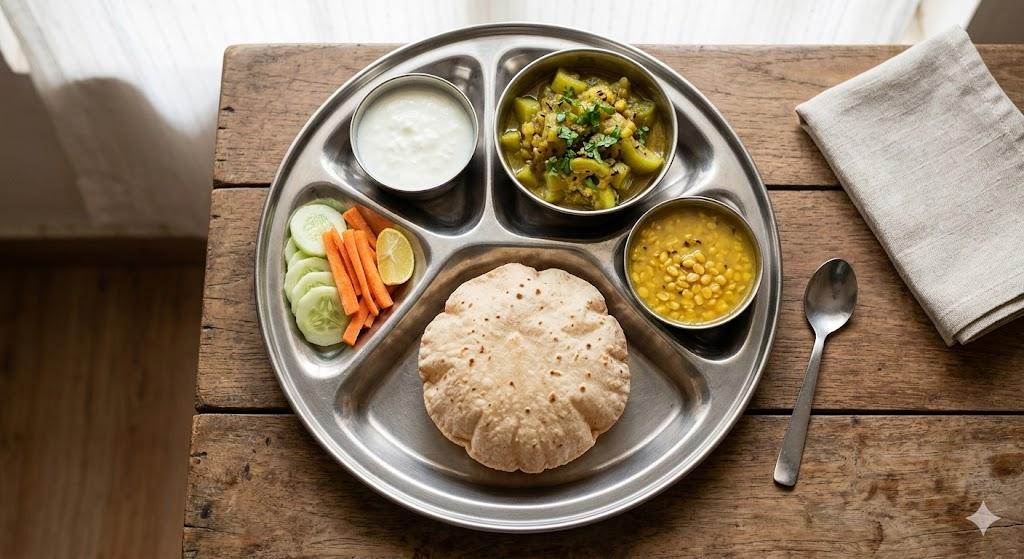
Dal, roti, seasonal vegetable sabzi and cucumber salad. Skip the automatic addition of pickle and papad.

Evening snack
Plain roasted chana and a fresh seasonal fruit instead of salted namkeen or chips.

Dinner
Vegetable moong dal khichdi with cumin, ginger and coriander. Use measured salt and avoid salty packaged accompaniments.
This is a meal-planning example, not a prescribed sodium calculation. You can adapt it to your appetite, dietary requirements and regional preferences.
8. 🩺 When Should You Be Particularly Careful?
If you have high blood pressure, heart failure, chronic kidney disease or another condition requiring dietary restrictions, ask your doctor or registered dietitian what sodium target is appropriate for you.
If you monitor blood pressure at home, measure it consistently using a validated device and follow your clinician’s instructions. Do not stop prescribed blood pressure medication simply because you have reduced your salt intake.
Seek urgent medical attention if a very high blood pressure reading—around 180/120 mmHg or above—is accompanied by chest pain, breathlessness, weakness, confusion or changes in vision.
9. Frequently Asked Questions
Is homemade Indian food always low in salt?
No. Homemade food can contain excessive sodium if large amounts of salt, salty spice mixes, sauces, stock cubes or preserved ingredients are used. The advantage of cooking at home is that you can control and measure these ingredients.
Is rock salt healthier than ordinary table salt for blood pressure?
Rock salt and black salt are not automatically low-sodium alternatives. Their sodium content varies, but they should not be treated as a way to avoid the effects of excess salt.
Can drinking extra water cancel out a salty meal?
No. Drinking water does not reliably cancel out excessive sodium intake or prevent the blood pressure effects of a consistently high-salt diet. The better approach is to limit excess sodium over time.
Should people with high blood pressure stop eating salt completely?
Usually, the goal is to reduce sodium to an appropriate level, not to eliminate it completely without medical guidance. Follow your clinician’s advice, particularly if you have kidney or heart disease or take medicines that affect fluid and electrolyte balance.
How can I make food tasty with less salt?
Use ginger, garlic, cumin, coriander, chilli, lemon, vinegar where appropriate, and fresh herbs. Gradually reducing salt can also help your taste preferences adjust.
Conclusion: Small Changes Can Protect Your Heart ❤️
Hidden salt is easy to overlook in everyday Indian meals. Pickles, papad, namkeen, bread, sauces and restaurant gravies can add sodium to the salt already used in cooking. When these foods are eaten frequently, total intake can exceed recommended levels and contribute to high blood pressure.
The solution is not to abandon traditional Indian food. It is to measure cooking salt, read packaged-food labels, limit salty accompaniments, eat more fresh foods and use spices to create flavour. Alongside regular physical activity, appropriate medical care and blood pressure monitoring, these habits can help support long-term heart health.
Remember: The goal is not to make every meal tasteless. It is to make lower-salt eating a sustainable part of everyday life.
References for further reading
- World Health Organization — Sodium reduction and health guidance.
- ICMR–National Institute of Nutrition — Diet and nutrition FAQs.