
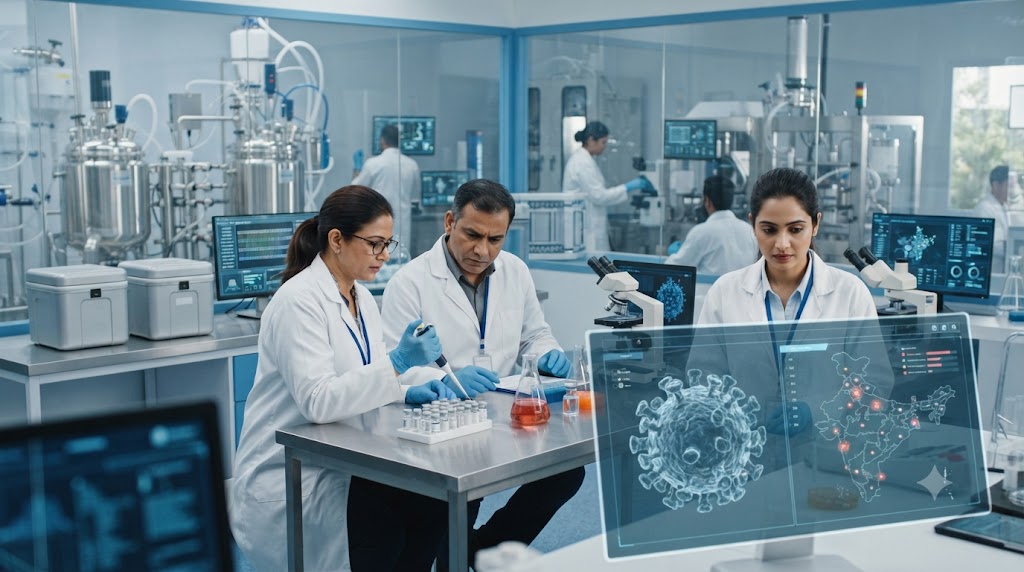
Introduction: Why Vaccine Preparedness Matters More Than Ever
The COVID-19 pandemic demonstrated that vaccine development is not only a scientific challenge but also a question of preparedness, manufacturing capacity, clinical research, regulation, financing, logistics, and public trust. For India, which has a large and diverse population as well as one of the world’s major vaccine manufacturing ecosystems, these lessons have influenced the country’s approach to future infectious-disease threats.
In 2026, India’s vaccine strategy is increasingly connected with broader pandemic-preparedness initiatives. The focus is moving beyond developing a vaccine after an outbreak begins toward building research platforms, surveillance networks, clinical-trial capacity, manufacturing systems, and partnerships that can be activated rapidly when a new pathogen emerges.
A major regional consultation held in New Delhi in April 2026 by the World Health Organization South-East Asia Regional Office and the Coalition for Epidemic Preparedness Innovations (CEPI) emphasized this shift from reactive research to a coordinated, ready-to-activate research ecosystem. The proposed framework covers basic science, clinical and epidemiological research, governance, vaccine manufacturing, implementation research, and behavioural and communication research. (World Health Organization)
For India, this strategy has significance not only for COVID-19-like pandemics but also for diseases such as Nipah, influenza, dengue and other emerging infections.
India’s Vaccine Research Ecosystem 🇮🇳
India already has an extensive vaccine research and manufacturing base involving government research institutions, biotechnology companies, universities, hospitals and regulatory agencies.
The Indian Council of Medical Research (ICMR), Department of Biotechnology (DBT), Biotechnology Industry Research Assistance Council (BIRAC), National Centre for Disease Control (NCDC), Indian Council of Agricultural Research (ICAR), Council of Scientific and Industrial Research (CSIR) and other institutions contribute to different stages of outbreak preparedness.
The National One Health Mission is particularly important because emerging infections frequently involve interactions between humans, animals and the environment. According to ICMR, the mission brings together 16 ministries and departments and supports integrated surveillance, laboratory networks, collaborative research, data integration and capacity building. (Indian Council of Medical Research)
This approach recognizes that a vaccine strategy cannot operate independently from disease surveillance. Researchers need to know which pathogens are circulating, where they are appearing, how they are changing genetically and how effectively they can spread.
From Pandemic Response to Pandemic Preparedness 🔬
One of the biggest lessons from COVID-19 is the importance of preparing research infrastructure before a crisis occurs.
The WHO-CEPI consultation held in New Delhi in April 2026 specifically highlighted the limitations of reactive and fragmented research during COVID-19. Participants called for pre-approved protocols, stronger clinical-trial networks, genomic surveillance, rapid financing mechanisms and greater regulatory coordination. (World Health Organization)
For India, this means that future vaccine research could increasingly rely on platforms and systems that are developed during periods of relative stability.
Instead of starting from zero when a new virus appears, researchers can potentially use established technologies, laboratory networks and clinical-trial infrastructure to move more quickly from pathogen identification to candidate evaluation.
This concept is closely associated with the international “100-Day Mission,” which seeks to accelerate the availability of effective diagnostics, therapeutics and vaccines during future health emergencies.
The Role of the National One Health Mission 🧪🐾🌱
Future outbreaks may originate from interactions between humans, animals and environmental systems. This makes One Health surveillance a major component of vaccine preparedness.
India’s National One Health Mission includes integrated disease surveillance, human and veterinary laboratory networks, joint outbreak investigations and collaborative research. ICMR reports that national laboratory networks are being strengthened to support testing across human and animal health sectors. (Indian Council of Medical Research)
This infrastructure can provide valuable information for vaccine researchers.
For example, when an emerging pathogen is detected in an animal population, researchers can investigate its genetic characteristics, transmission potential and relationship to human disease. Such information can help determine whether vaccine development should begin before widespread human transmission occurs.
The same approach can also support research on diseases such as Nipah and avian influenza, where animal reservoirs and cross-species transmission are important considerations.
Vaccine Platforms Could Speed Up Future Responses ⚙️
Modern vaccine research increasingly depends on flexible technological platforms rather than a completely different manufacturing process for every disease.
mRNA technologies, viral-vector platforms, recombinant proteins, protein nanoparticles and other approaches can potentially be adapted to new pathogens. The precise speed and effectiveness of adaptation depend on the pathogen, platform, manufacturing requirements and clinical evidence.
For India, developing domestic expertise across several vaccine technologies can reduce dependence on a single technological pathway.
The country’s existing pharmaceutical and vaccine manufacturing ecosystem also provides a foundation for scaling successful candidates. The Central Drugs Standard Control Organisation (CDSCO) maintains information on manufacturing permissions for human vaccines, including updates through 2026. (CDSCO)
The strategic objective is therefore not simply to invent vaccines but to connect discovery, testing, regulation and large-scale production.
Strengthening Indigenous Vaccine Innovation 🇮🇳
An important part of India’s strategy is the translation of publicly funded research into products that can eventually reach patients.
In July 2026, ICMR announced the transfer of three indigenous biomedical technologies to Indian manufacturers for further development, manufacturing and commercialization. The technologies included two next-generation vaccine technologies against enteric bacterial infections developed at ICMR-NIRBI in Kolkata. (Press Information Bureau)
Technology transfer can help bridge one of the traditional gaps in biomedical research: moving promising discoveries from laboratories into scalable products.
This model can become particularly valuable during emerging outbreaks, when research institutions may identify promising vaccine technologies but industrial partners are needed for process development, clinical manufacturing and eventual scale-up.
India and CEPI: Building International Vaccine Partnerships 🌍
Pandemic preparedness is inherently international because infectious diseases do not respect national borders.
India’s Department of Biotechnology and BIRAC renewed their engagement strategy with CEPI in 2025 for cooperation in vaccine and allied technology research, development and innovation. The partnership builds on an earlier agreement from 2019. (Press Information Bureau)
The collaboration reflects the importance of international scientific partnerships in preparing for diseases that could emerge anywhere in the world.
International cooperation can provide access to shared research networks, scientific expertise, funding mechanisms, clinical studies and technologies. At the same time, India’s manufacturing capabilities can contribute to global vaccine supply.
In September 2026, India’s Department of Science and Technology also highlighted India’s role as a major vaccine producer and emphasized the country’s disease diversity as an asset for vaccine research and epidemic preparedness. (Press Information Bureau)
Clinical Trials: The Bridge Between Discovery and Vaccination 🏥
A vaccine candidate cannot become a public-health tool simply because laboratory experiments produce encouraging results.
Clinical research is essential for understanding safety, immune responses, effectiveness and appropriate use in different populations.
Future preparedness therefore requires clinical-trial networks that can become operational quickly during an outbreak.
The WHO-CEPI consultation in 2026 identified stronger clinical-trial networks and pre-established research protocols as important elements of pandemic preparedness. (World Health Organization)
For India, a large and diverse population provides opportunities for clinical research, but preparedness also requires strong ethical oversight, transparent informed consent, reliable data systems and rapid coordination between hospitals, researchers and regulators.
Research should also include populations that can be overlooked during emergencies, including children, older adults and people living in geographically underserved communities.
Genomic Surveillance and Vaccine Research 🧬
Genomic surveillance is another major component of the emerging preparedness model.
Viruses can change over time. Monitoring genetic changes helps researchers understand how pathogens evolve and whether changes could affect transmission, diagnostics or vaccine performance.
India’s One Health strategy includes technology-driven surveillance and a metagenomic platform for emerging health threats. (Indian Council of Medical Research)
Connecting genomic information with epidemiological and clinical data can provide a more complete picture of an outbreak.
For vaccine research, this information can help scientists determine whether existing vaccine candidates remain relevant or whether updated formulations may eventually be necessary.
Rapid Regulatory Systems Are Essential ⚖️
Scientific speed must be matched by regulatory preparedness.
During an emergency, regulatory agencies need to evaluate evidence rapidly while maintaining appropriate standards for safety and quality. This requires established procedures rather than creating entirely new processes in the middle of an outbreak.
The 2026 WHO regional consultation identified regulatory harmonization and governance as important areas for strengthening pandemic research preparedness. (World Health Organization)
For India, continued coordination among research organizations, manufacturers, ethics committees and regulatory authorities can help reduce unnecessary delays while preserving scientific and ethical safeguards.
The objective is not simply faster approval. It is faster generation and evaluation of reliable evidence.
Manufacturing Capacity: Turning Research Into Public Health Impact 🏭💉
A vaccine is useful only when it can be manufactured at sufficient scale and delivered to the people who need it.
India’s large vaccine manufacturing sector is therefore an important part of national and international pandemic preparedness.
Manufacturing preparedness includes more than production facilities. It involves raw materials, specialized equipment, quality-control systems, cold-chain requirements, trained personnel, packaging, distribution and regulatory compliance.
The availability of multiple manufacturers can also improve resilience by reducing dependence on a single production facility.
The CDSCO’s continuing publication of human-vaccine manufacturing permissions illustrates the regulatory infrastructure associated with India’s vaccine manufacturing ecosystem. (CDSCO)
The Importance of Affordable Vaccines 💰
Future vaccine preparedness must also consider affordability.
An outbreak response can be weakened if vaccines are scientifically successful but inaccessible to large sections of the population.
India’s experience as a major vaccine producer creates opportunities to combine innovation with large-scale manufacturing. However, affordability depends on research costs, manufacturing economics, technology licensing, procurement policies, supply chains and international partnerships.
The WHO-CEPI framework also places vaccine market and manufacturing research alongside scientific and clinical research, demonstrating that access is considered part of preparedness rather than a separate issue. (World Health Organization)
Vaccine Confidence and Public Communication 📢
Scientific preparedness alone cannot end an outbreak.
People must be willing and able to use vaccines when they are recommended. Misinformation, uncertainty and distrust can reduce vaccination uptake even when vaccines are available.
The 2026 WHO regional framework therefore includes behavioural, social and communication research as one of its six pillars. (World Health Organization)
India’s future vaccine strategy can benefit from stronger communication research before an emergency begins. Researchers can study how communities receive health information, which communication channels are trusted and how vaccine concerns vary across populations.
Clear communication should also acknowledge uncertainty when evidence is still developing.
Digital Technology and Artificial Intelligence 🤖
Artificial intelligence and digital systems are increasingly relevant to vaccine preparedness.
AI can potentially support pathogen surveillance, genomic analysis, antigen discovery, clinical-trial recruitment, data analysis and monitoring of vaccine safety.
However, AI does not replace laboratory validation or clinical evidence. Its usefulness depends on the quality of the underlying data, scientific validation and responsible governance.
The WHO’s 2026 vaccine-preparedness framework identifies digitalization and AI among its common enablers, alongside data sharing, financing, collaboration and knowledge exchange. (World Health Organization)
For India, integrating digital health infrastructure with research systems could improve the speed at which information moves between laboratories, hospitals, public-health authorities and researchers.
Preparing for Diseases Beyond COVID-19 🦠
Future vaccine preparedness cannot focus on a single pathogen.
India faces a diverse infectious-disease environment that includes respiratory viruses, vector-borne diseases, zoonotic infections and diseases that may emerge through environmental or ecological changes.
The National One Health Mission specifically identifies collaborative R&D for priority zoonotic diseases including Nipah, avian influenza and brucellosis. (Indian Council of Medical Research)
This broader approach is important because the next major outbreak may not resemble COVID-19.
Preparedness therefore requires adaptable platforms, broad surveillance and research capacity that can respond to different types of pathogens.
Challenges India Still Needs to Address
India’s growing vaccine ecosystem does not eliminate all preparedness challenges.
Research capacity remains uneven across institutions and regions. Advanced early-stage research, specialized clinical trials, genomic infrastructure, data integration and manufacturing capabilities need continued investment.
Another challenge is coordination. Vaccine development involves multiple stages and organizations. Weak connections between basic research, clinical research, manufacturing and public-health programmes can slow the movement of discoveries into real-world applications.
Evidence generation must also remain transparent. Rapid research should not mean compromising trial quality, safety monitoring, ethics or public accountability.
Finally, vaccine preparedness needs sustained funding between outbreaks. A system built only during a crisis is unlikely to provide the same readiness as infrastructure maintained continuously.
What India’s Future Vaccine Strategy Could Look Like 🔮
India’s emerging strategy can be understood as a connected ecosystem rather than a single vaccine-development programme.
Disease surveillance can identify emerging threats. Genomic systems can characterize pathogens. Research institutions can develop candidate vaccines. Clinical networks can evaluate them. Regulatory systems can review evidence. Manufacturers can scale successful products. Public-health programmes can distribute them. Communication systems can support informed vaccination decisions.
The 2026 WHO-CEPI consultation’s six-pillar framework reflects this interconnected approach: basic science, clinical and epidemiological research, governance, manufacturing and market research, implementation research, and behavioural and communication research. (World Health Organization)
For India, strengthening all of these components could make vaccine research more responsive to future outbreaks.
Conclusion: Building a Vaccine-Ready India 🌏💉
India’s vaccine research strategy is increasingly moving from emergency response toward permanent preparedness.
The country’s vaccine manufacturing capacity provides an important foundation, but future pandemic resilience will depend on much more than production volume. Surveillance, genomic science, One Health coordination, clinical-trial networks, regulatory preparedness, indigenous innovation, technology transfer, manufacturing resilience, affordability and public trust all need to function together.
Recent developments in 2026—including the WHO-CEPI research-preparedness consultation in New Delhi, continued India-CEPI cooperation, the National One Health Mission and ICMR’s transfer of vaccine technologies to Indian manufacturers—show how the ecosystem is expanding beyond conventional vaccine development. (World Health Organization)
The central lesson is straightforward: preparation has to begin before the next outbreak. By maintaining scientific infrastructure, strengthening partnerships and developing technologies that can be rapidly adapted, India can contribute not only to protecting its own population but also to wider global preparedness against emerging infectious diseases.