
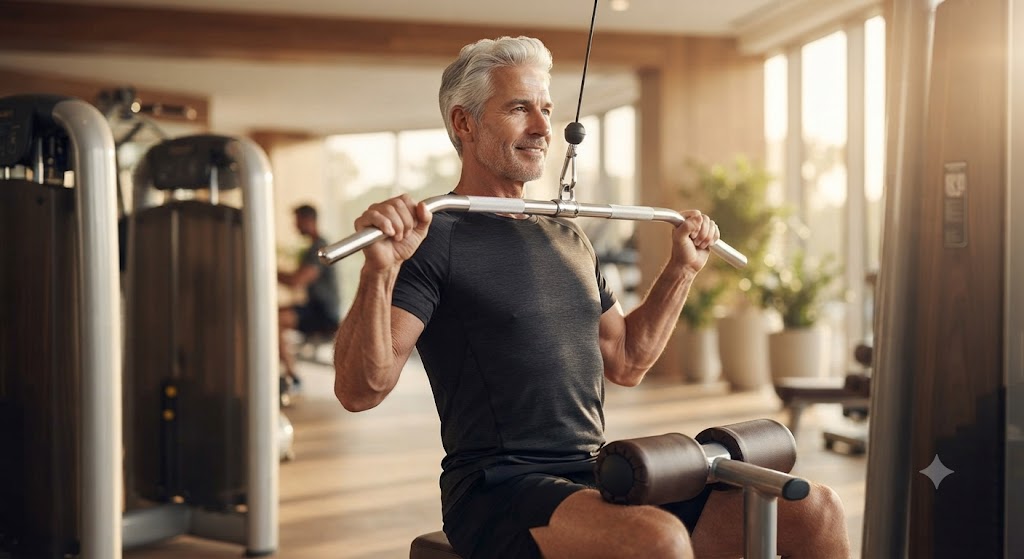
Smartwatches and fitness trackers have transformed exercise from something people simply do into something they can continuously measure. Every walk, run, cycling session, workout, and recovery period can generate data about heart rate, movement, sleep, calories, and training patterns.
Scientists are increasingly studying these massive datasets to understand how people exercise in real life—not just under controlled laboratory conditions. From identifying patterns linked to cardiovascular health to understanding recovery and physical activity, wearable technology is creating a new window into human fitness.
📊 The Rise of Wearable Fitness Data
Millions of people now wear devices capable of recording physical activity throughout the day. Unlike traditional fitness studies, which may involve hundreds or thousands of participants completing scheduled tests, wearable-based research can potentially examine activity patterns across much larger populations.
Researchers can analyze information such as:
- ❤️ Heart-rate patterns during exercise
- 🏃 Running and walking activity
- 🚴 Cycling and other endurance activities
- 🏋️ Workout frequency and duration
- 😴 Sleep duration and consistency
- 🚶 Daily step counts
- 🔥 Estimated energy expenditure
- ⏱️ Training intensity and recovery
- 📈 Changes in activity over time
The real scientific value isn’t simply the enormous amount of data. It is the ability to observe how people actually behave outside the laboratory.
A person may perform well during a supervised fitness test but spend most of the rest of the week sitting. Wearable data can reveal that difference.
🧬 What Millions of Workouts Can Tell Scientists
Large-scale wearable datasets allow researchers to investigate relationships that would be difficult to detect in smaller studies.
For example, scientists can examine whether people who consistently accumulate more moderate-to-vigorous physical activity show different long-term health patterns from people with lower activity levels.
Researchers can also study consistency.
Two people might complete the same number of workouts in a month, but their routines could look completely different. One person may exercise regularly throughout the month, while another may perform intense workouts sporadically.
That distinction could help researchers understand whether how activity is distributed matters alongside the total amount of exercise.
🏃 Exercise Intensity Matters
Wearable heart-rate measurements provide researchers with another important dimension: intensity.
Simply counting steps doesn’t tell the entire story. Walking slowly for an hour and running for 30 minutes can produce very different physiological responses.
Heart-rate and movement data can help researchers estimate how much time individuals spend at different levels of physical exertion.
This creates opportunities to study questions such as:
Does accumulating short periods of higher-intensity activity provide measurable benefits?
How much moderate activity is associated with better health outcomes?
Does increasing activity gradually produce better long-term adherence?
These questions are particularly interesting because real-world exercise habits are often very different from traditional workout programs.
❤️ Wearables and Cardiovascular Fitness
One of the most promising applications of wearable data is studying cardiovascular fitness.
Some devices estimate metrics related to aerobic capacity, including VO₂ max or cardiorespiratory fitness. Although consumer-device estimates are not equivalent to laboratory testing, repeated measurements can potentially provide useful information about changes over time.
For example, someone beginning an exercise program might see improvements in estimated cardiovascular fitness after several weeks or months.
Researchers can investigate whether these changes correspond with broader health outcomes.
The bigger scientific opportunity comes from looking at patterns across populations rather than relying on a single measurement.
A single fitness score provides limited information.
Thousands or millions of measurements collected over time can reveal trajectories.
😴 Exercise, Sleep and Recovery
Wearable research isn’t limited to workouts.
Scientists are increasingly interested in the relationship between physical activity, sleep and recovery.
A wearable may collect information throughout the entire day, allowing researchers to examine questions such as:
- Does increased activity influence sleep duration?
- Does poor sleep affect next-day exercise?
- How does training intensity relate to resting heart rate?
- Are irregular sleep patterns associated with irregular exercise?
- How does recovery change during periods of increased training?
These relationships are complicated because correlation does not necessarily mean causation.
For example, a person who sleeps poorly may exercise less the next day. But exercise habits, stress, illness, work schedules and lifestyle can also affect sleep.
Large datasets allow researchers to examine these interactions more closely.
🧠 Fitness Data and Mental Well-Being
Another emerging research area involves physical activity and mental health.
Wearables can provide objective—or at least semi-objective—measurements of movement and sleep that complement traditional questionnaires.
Researchers can investigate whether changes in activity, sleep patterns or daily routines are associated with changes in mood or mental-health outcomes.
This is especially valuable because questionnaires typically capture how people remember or describe their behavior, while wearable devices can record patterns continuously.
However, wearable data should not be interpreted as a diagnostic tool. A change in activity or sleep can have many possible explanations.
🔬 Why Real-World Data Is So Valuable
Traditional exercise research often requires participants to visit laboratories, follow prescribed programs and complete standardized assessments.
That approach remains extremely important.
But it doesn’t always represent everyday life.
Wearables can capture what happens when people:
- Travel
- Work long hours
- Get sick
- Take vacations
- Change jobs
- Start exercising
- Stop exercising
- Experience stressful periods
- Change their sleep schedules
This creates a more realistic picture of human behavior.
Scientists can therefore study fitness as a dynamic process rather than a single test result.
⚠️ The Data Has Important Limitations
Despite their potential, wearable datasets are not perfect.
Different devices use different sensors, algorithms and proprietary methods. Two watches can sometimes produce different estimates for the same activity.
Calories burned are particularly difficult to estimate accurately.
Step counts can also vary depending on device placement and movement patterns.
Heart-rate measurements may be affected by device fit, skin contact and exercise type.
There is another major issue: who is actually wearing the device?
Wearable users may not represent the entire population. They may differ in age, income, technology access, health awareness, exercise habits and motivation.
This creates the possibility of selection bias.
A study based on millions of wearable users may therefore be enormous without necessarily being representative of everyone.
🔐 Privacy Becomes Increasingly Important
More fitness data means more responsibility.
Wearables can generate highly personal information about someone’s daily routine, location patterns, sleep, physical activity and physiological signals.
Researchers and technology companies must therefore consider:
- Data privacy
- Consent
- Secure storage
- Anonymization
- Responsible data sharing
- Potential misuse of health information
As wearable research expands, privacy protection will become just as important as scientific innovation.
🌍 From Individual Fitness to Population Health
Perhaps the most exciting possibility is that wearable data could help researchers understand physical activity at a population level.
Instead of asking only:
“How active is this individual?”
researchers can begin asking:
“How are activity patterns changing across entire populations?”
That could help identify periods when physical activity decreases, understand differences between age groups, and examine how environmental or social factors influence exercise behavior.
For public-health researchers, this information could eventually help inform strategies designed to encourage more movement.
🚀 What Comes Next?
The next generation of wearable research is likely to become even more sophisticated.
Devices are increasingly combining multiple signals—including movement, heart rate and sleep-related measurements—to create a more complete picture of daily physiology.
Artificial intelligence could help researchers identify patterns hidden within enormous datasets.
Instead of analyzing every variable separately, machine-learning systems can search for combinations of behaviors associated with particular outcomes.
But more data does not automatically mean better science.
Researchers still need carefully designed studies, appropriate statistical methods and clinical validation.
The strongest future research will likely combine wearable data with medical records, genetics, questionnaires and traditional clinical measurements.
🏁 Conclusion
Wearable fitness technology is giving scientists an unprecedented opportunity to study exercise in the real world.
Millions of workouts can reveal patterns in activity, intensity, recovery, sleep and long-term behavior that would be difficult to capture through conventional research alone.
At the same time, wearable measurements have limitations. Device accuracy varies, datasets can contain demographic biases, and correlations do not prove that one behavior causes a health outcome.
The most important lesson is that wearable data should not be viewed simply as a collection of numbers on a smartwatch.
Used responsibly, it can become a powerful scientific tool—helping researchers understand how humans move, recover and maintain physical activity over months and years.
And as more people use wearable technology, the world’s biggest fitness experiment may already be happening every day, one workout at a time.