
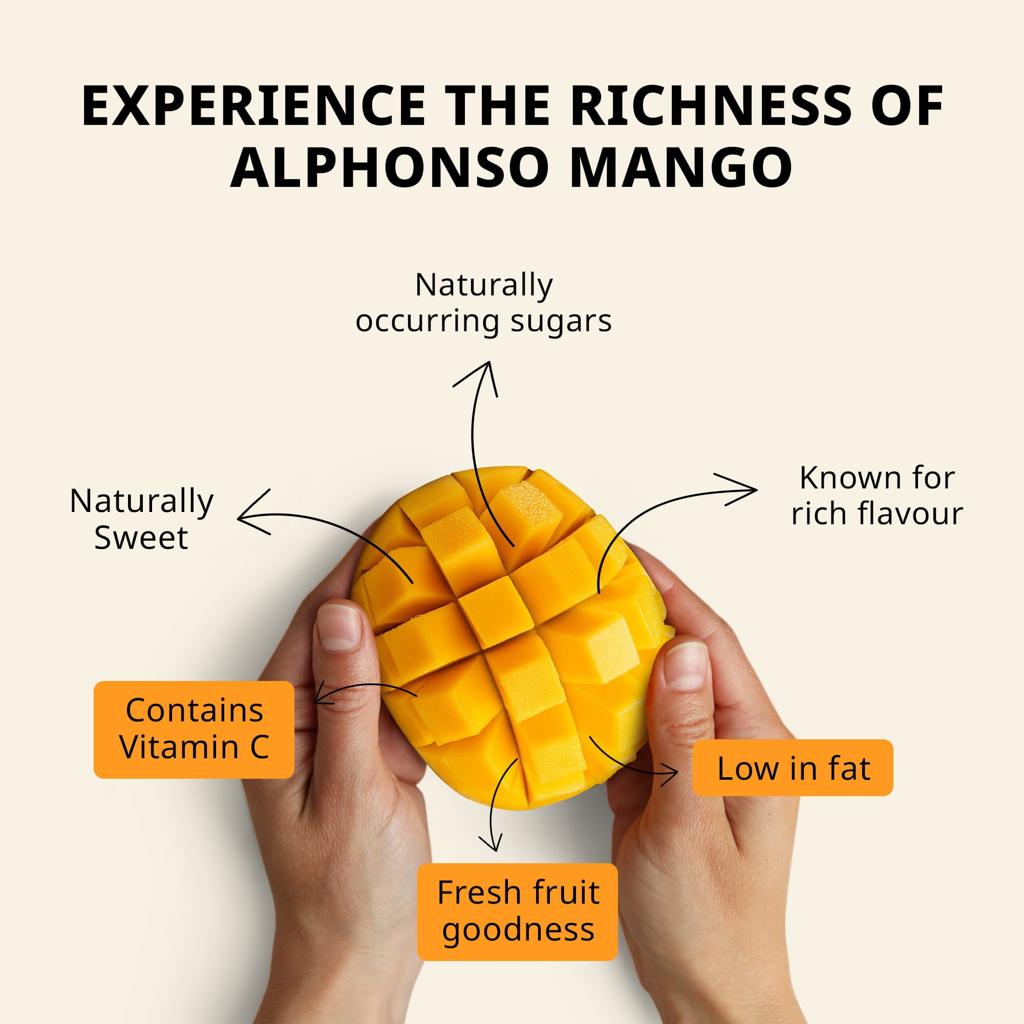
Alphonso mango, widely known as Hapus, is one of India’s most celebrated mango varieties. Its golden-yellow flesh, intense aroma, smooth texture, and naturally sweet flavor have made it a favorite during the summer fruit season. But beyond its taste and cultural importance, Alphonso mango is also an interesting subject for nutrition and health research.
Mangoes contain vitamin C, carotenoids, dietary fiber, natural carbohydrates, and numerous polyphenolic compounds. Scientific research has explored whether these nutrients and bioactive compounds may influence antioxidant defenses, digestive health, satiety, glucose metabolism, inflammation, and other aspects of human health. (PubMed)
At the same time, it is important to distinguish between what is established about mango’s nutritional composition and what remains under investigation. A laboratory finding involving a mango compound does not necessarily mean that eating an ordinary serving of Alphonso mango will produce the same medical effect.
This article explores the nutritional science behind Alphonso mango, its antioxidant compounds, potential health benefits, practical ways to eat it, and what current research actually tells us.


🌱 What Is Alphonso Mango?
Alphonso is a variety of Mangifera indica, the species that includes many of the mangoes cultivated and consumed around the world. In India, Alphonso is especially associated with the Konkan region of Maharashtra and with areas such as Ratnagiri and Devgad.
The fruit is generally recognized by its relatively small-to-medium size, yellow-orange flesh, distinctive aroma, smooth texture, and rich sweetness.
Its popularity is not simply a matter of taste. Alphonso represents an important part of India’s horticultural and food culture, while mangoes more broadly are an important source of nutrients and plant compounds.
The ripe fruit contains naturally occurring sugars, water, fiber, vitamin C, carotenoids, and various phytochemicals. The exact nutrient concentration can vary according to cultivar, ripeness, growing conditions, agricultural practices, storage, and serving size.
🥭 Why Is Alphonso So Popular?
Several characteristics distinguish Alphonso from many other mango varieties.
Its aroma comes from a complex mixture of volatile compounds. Its yellow-orange flesh reflects the presence of pigments including carotenoids. Its creamy texture and relatively low fibrousness make it particularly attractive for eating fresh, preparing desserts, making beverages, or incorporating into other foods.
But from a health perspective, the important question is not simply whether Alphonso tastes good. It is whether the nutrients and plant compounds present in mango can contribute meaningfully to a healthy dietary pattern.
The evidence suggests that mango can make a useful contribution, although it should not be treated as a medicine.
🔬 Alphonso Mango Nutritional Profile
Mango is a nutrient-containing fruit rather than merely a source of sugar. Its nutritional value comes from a combination of vitamins, minerals, fiber, carotenoids, and polyphenols.
The precise nutritional profile of Alphonso can vary, so it is better to think about its major nutritional components rather than assign one universal number to every fruit.
🍊 1. Vitamin C
Vitamin C is one of the important micronutrients found in mango.
It performs several essential functions in the human body. It contributes to:
- Normal immune-system function
- Collagen formation
- Wound healing
- Normal connective-tissue function
- Antioxidant protection
- Improved absorption of non-heme iron from plant foods
Vitamin C is water-soluble, meaning the body does not store large amounts of it for long periods. Regular consumption of vitamin-C-containing fruits and vegetables therefore helps maintain adequate dietary intake.
Alphonso mango can contribute to this intake as part of a varied diet.
🥕 2. Carotenoids
The beautiful golden-orange color of ripe Alphonso mango is partly related to carotenoid pigments.
Carotenoids are naturally occurring plant pigments found in many yellow, orange, red, and green fruits and vegetables.
Some carotenoids can be converted into vitamin A by the body. Vitamin A is important for normal vision, immune function, cellular development, and maintenance of epithelial tissues.
Beta-carotene is one of the carotenoids that can contribute to vitamin A activity.
This makes colorful fruits such as mango interesting from a nutritional perspective.
🌾 3. Dietary Fiber
Mango also provides dietary fiber.
Fiber can support normal bowel function and contributes to a feeling of fullness after eating. It also forms part of the food matrix that makes whole fruit different from many fruit beverages.
The amount of fiber in a serving depends on the fruit’s size, variety, ripeness, and the portion consumed.
For people trying to increase fiber intake, whole mango is generally more useful than strained mango juice because the whole fruit retains its natural structure.
⚡ 4. Natural Carbohydrates
Alphonso mango is naturally sweet because it contains carbohydrates, including naturally occurring sugars.
This is important because mango is nutritious, but it is not carbohydrate-free.
People who require careful carbohydrate management—including some people with diabetes—should consider serving size and the total carbohydrate content of their meal.
At the same time, naturally occurring sugars in whole fruit should not be treated as equivalent to added sugars found in sweets, sugar-sweetened drinks, and many ultra-processed foods.
💧 5. Water and Hydration
Fresh mango contains a substantial amount of water.
Although mango should not replace water as the primary source of hydration, water-rich fruits can contribute to overall fluid intake.
Eating mango alongside other fruits and vegetables can therefore support a varied and nutrient-rich diet.
🧪 Antioxidants in Alphonso Mango
One of the most interesting areas of mango research concerns its bioactive compounds.
Mango contains several types of phytochemicals, including polyphenols and carotenoids. Researchers have investigated these compounds because of their antioxidant and other biological activities.


🛡️ What Are Antioxidants?
Normal metabolism produces reactive molecules in the body. Environmental factors can also contribute to oxidative stress.
Antioxidant systems help the body manage reactive molecules and protect biological structures from excessive oxidative damage.
Foods provide numerous antioxidant compounds, but nutrition science does not view antioxidants as a single category with one universal effect.
Different compounds work through different mechanisms.
🍃 Polyphenols
Mango contains several polyphenolic compounds.
Research has identified compounds including mangiferin and various phenolic acids, flavonoids, and gallotannin-related compounds in mango and mango-derived materials. (PubMed)
These compounds have attracted attention because laboratory research has demonstrated antioxidant and other biological activities.
However, the amount absorbed by the human body and the physiological effects of normal dietary consumption are more complicated.
That is why laboratory studies should be interpreted alongside human clinical trials.
❤️ Potential Benefit 1: Supporting a Heart-Healthy Diet
Mango can fit naturally into a heart-healthy dietary pattern.
Fruit consumption is generally encouraged as part of balanced diets because fruits provide fiber, micronutrients, water, and plant compounds while generally being relatively low in energy density compared with many processed snack foods.
Mango provides several potentially useful nutrients, including vitamin C, carotenoids, potassium, and fiber.
Some human mango studies have also investigated cardiovascular and metabolic markers.
For example, a 2018 randomized clinical study involving 21 adults examined daily mango consumption for six weeks. The researchers reported changes in selected inflammatory and metabolic markers, although the study was small and involved a specific intervention rather than proving that mango prevents cardiovascular disease. (PubMed)
This is an important distinction.
Mango may contribute to a heart-friendly eating pattern, but mango alone should not be regarded as a cardiovascular treatment.
🦠 Potential Benefit 2: Digestive and Gut Health
The relationship between food and the gut microbiome is an expanding area of nutrition research.
Mango is particularly interesting because it provides fiber and polyphenolic compounds that may interact with intestinal microorganisms.
A 2023 randomized controlled crossover study examined 27 adults who consumed mango or a low-fat cookie comparison for 12 weeks. Researchers reported differences in certain measures of gut microbiome diversity and composition during the mango intervention. The study did not find significant differences in several gut permeability or bowel-movement measures. (PubMed)
These findings are interesting, but they should not be exaggerated.
The study was relatively small, and microbiome changes do not automatically mean that a food prevents disease.
Still, it provides a reason for researchers to continue investigating mango and gut health.
🌾 Fiber + Plant Compounds
The potential relationship may involve more than fiber alone.
Some mango polyphenols reach the digestive tract and can be transformed by gut microorganisms into other metabolites. Research has shown that mango phenolic compounds can be metabolized after consumption. (PubMed)
This interaction between dietary compounds and the microbiome is an important area for future nutrition research.
🩸 Potential Benefit 3: Blood Glucose and Metabolic Health
Because Alphonso mango is sweet, many people wonder whether it is suitable for people concerned about blood glucose.
The answer depends partly on portion size and the individual’s overall dietary pattern.
Mango contains naturally occurring carbohydrates, but it also contains fiber and other plant compounds.
Interestingly, controlled studies have investigated how mango consumption affects post-meal glucose and insulin responses.
One randomized crossover study involving 23 overweight or obese adults compared a 100-calorie fresh mango snack with an isocaloric low-fat cookie snack. The researchers evaluated post-meal glucose, insulin, and satiety responses. (PubMed)
Another recent randomized controlled study examined mango consumption in adults with overweight or obesity and chronic low-grade inflammation. The study reported lower insulin after four weeks compared with the control intervention, while fasting glucose and several inflammatory markers did not show significant differences. (PubMed)
These findings are scientifically interesting but do not establish mango as a diabetes treatment.
🍽️ Practical Lesson
For someone monitoring blood glucose, eating a moderate amount of whole mango may be different from drinking a large glass of sweetened mango beverage.
The entire meal matters.
For example, mango can be combined with:
- Unsweetened yogurt
- Nuts and seeds
- Oats
- A balanced meal containing protein
- Other high-fiber foods
Portion control remains important.
⚖️ Potential Benefit 4: Satiety and Healthy Eating
Mango can also be useful as an alternative to highly processed sweet snacks.
Whole fruit contains water and fiber, which can contribute to fullness.
Research comparing fresh mango with an isocaloric cookie snack has examined satiety responses and metabolic measures. (PubMed)
This does not mean mango automatically causes weight loss.
Body weight is influenced by total energy intake, physical activity, sleep, genetics, medications, metabolic health, and many other factors.
However, replacing some highly processed desserts or sugary snacks with whole fruit can be one practical way of improving overall dietary quality.
🧬 Potential Benefit 5: Anti-Inflammatory Research
Inflammation is a complex biological process involved in immunity, tissue repair, and many chronic diseases.
Mango has attracted research interest because its polyphenols and carotenoids may influence biological pathways related to oxidative stress and inflammation.
Human research has produced some interesting results.
In one six-week study, researchers observed changes in selected inflammatory and metabolic markers among participants consuming mango daily. (PubMed)
A 2026 pilot study involving 15 male elite beach-volleyball players examined mango puree consumption during regular training and reported lower concentrations of several inflammation- and muscle-damage-related biomarkers during the mango intervention. However, this was a very small study in a highly specific population, so the findings should not be generalized to everyone. (PubMed)
The broader lesson is that mango is scientifically interesting—but much larger and longer clinical trials are needed before strong health claims can be made.
✨ Potential Benefit 6: Skin Health
Vitamin C and carotenoids make mango relevant to nutritional research on skin.
Vitamin C participates in collagen formation, while carotenoids are involved in antioxidant biology.
One randomized clinical pilot study investigated mango consumption and facial skin outcomes in postmenopausal women. The study used Ataulfo mango, not Alphonso mango, so its findings should not be presented as proof of an Alphonso-specific effect. Researchers reported changes in wrinkle measures in one of the intervention groups. (PubMed)
This illustrates an important principle:
Evidence about one mango variety cannot automatically be transferred to every other mango variety.
Nevertheless, consuming fruits rich in vitamin C and carotenoids can form part of a nutritious diet that supports normal skin function.
👁️ Potential Benefit 7: Eye Health
Carotenoids are particularly important when discussing eye nutrition.
Vitamin A is essential for normal vision, and provitamin A carotenoids can contribute to vitamin A status.
Because mango contains carotenoids, it can contribute to dietary intake of these compounds.
However, maintaining good eye health requires more than one food. A varied diet containing leafy greens, colorful vegetables, fruits, legumes, nuts, seeds, and other nutrient-rich foods provides a wider range of compounds associated with eye health.
People experiencing vision problems should seek appropriate eye care rather than relying on mango or other foods as treatment.
🛡️ Potential Benefit 8: Immune-System Support
Mango contributes vitamin C and other nutrients involved in normal physiological functions.
Vitamin C is particularly relevant to immune health because it contributes to normal immune-system function.
However, the phrase “boosts immunity” can be misleading.
The immune system is highly complex. No single fruit can make a person immune to infections.
Instead, the more scientifically accurate message is that a nutritious diet containing adequate vitamins and minerals helps support normal immune function.
🧠 Potential Benefit 9: Research Into Cognitive Health
Researchers have recently begun investigating whether mango consumption and its bioactive compounds may influence cognitive function.
A recent randomized, placebo-controlled pilot study investigated daily mango consumption with probiotics in adults with overweight or obesity. The researchers examined microbial metabolites, inflammation, and cognitive outcomes. (PubMed)
This is an emerging field rather than an established health benefit.
More research is needed to understand whether regular mango consumption has meaningful long-term effects on cognitive health.
🔬 Alphonso Mango vs. General Mango Research
This distinction is extremely important.
When a scientific paper says “mango,” it may have used a particular cultivar such as:
- Ataulfo
- Kent
- Tommy Atkins
- Keitt
- Other mango varieties
Research performed on one cultivar does not automatically prove identical effects for Alphonso.
Cultivars can differ in:
- Carotenoid composition
- Polyphenol concentration
- Sugar content
- Fiber content
- Aroma compounds
- Ripening characteristics
- Fruit size
- Growing conditions
Therefore, when discussing the health benefits of Alphonso, it is more scientifically accurate to say that research on mango provides relevant evidence about the fruit category, while direct clinical evidence specifically on Alphonso remains more limited.
🍹 Whole Alphonso Mango vs. Mango Juice
This is one of the most important practical considerations.
Eating a whole mango preserves the fruit’s natural structure and fiber.
Juicing can make it easier to consume a larger amount of fruit quickly.
Commercial mango drinks may also contain added sugar.
Therefore, a glass of sweetened mango beverage should not be treated nutritionally as equivalent to eating a moderate serving of fresh Alphonso.


🥣 Healthy Ways to Eat Alphonso Mango
Alphonso is naturally sweet enough that it often does not need additional sugar.
You can enjoy it as:
🥭 Fresh Mango
Simply peel and slice ripe Alphonso mango and enjoy it as a snack or dessert.
🥣 Mango With Unsweetened Yogurt
Mango combined with plain yogurt provides carbohydrates alongside protein and other nutrients.
🌾 Mango Oatmeal
Small pieces of mango can add natural sweetness and flavor to oatmeal.
🥗 Mango Salad
Mango can be combined with cucumber, leafy vegetables, herbs, nuts, or seeds to create a colorful salad.
🥤 Mango Smoothie
Use fresh mango with unsweetened yogurt or milk rather than adding large amounts of sugar.
🍨 Homemade Mango Dessert
Frozen mango can be blended into a simple fruit-based dessert without needing large amounts of added sugar.
⚠️ Can You Eat Too Much Alphonso Mango?
Yes.
Although mango is nutritious, eating very large quantities can significantly increase carbohydrate and calorie intake.
The fact that a food contains vitamins and antioxidants does not mean unlimited consumption is beneficial.
A balanced approach is more useful.
For most people, mango can comfortably fit into a varied diet. People who have diabetes or another condition requiring carbohydrate management should discuss individualized portions with their healthcare professional or dietitian.
🩺 Is Alphonso Mango Safe for People With Diabetes?
People with diabetes do not necessarily need to eliminate mango from their diet.
However, mango contains natural carbohydrates, so portion size matters.
A useful strategy is to consider:
1. Portion size
A smaller serving provides less carbohydrate than a very large bowl.
2. Whole fruit
Whole mango generally provides more fiber and structure than juice.
3. Meal composition
Combining fruit with protein, healthy fats, and fiber-rich foods may create a more balanced meal.
4. Individual response
Blood glucose responses vary between people.
Anyone taking glucose-lowering medication or following a medically prescribed diet should follow individualized advice from their healthcare professional.
🧪 What Does Scientific Research Really Say?
The research picture can be divided into several levels.
Strong nutritional evidence
Mango is a nutrient-containing fruit providing vitamin C, carotenoids, fiber, carbohydrates, and other micronutrients.
Promising experimental evidence
Mango polyphenols and carotenoids demonstrate antioxidant and other biological activities in laboratory research. (PubMed)
Early human evidence
Clinical studies have investigated mango in relation to gut microbiota, satiety, glucose metabolism, inflammation, and other outcomes. Some findings are promising, but studies are often small or short-term. (PubMed)
What remains uncertain
More research is needed to determine whether long-term mango consumption can reduce the risk of specific diseases or produce clinically meaningful changes in large populations.
This is why mango should be described as a nutritious fruit with potential health-supporting properties, rather than as a treatment or cure.
🌿 Alphonso Mango and the Indian Food Tradition
Mango occupies a special place in Indian food culture.
From summer fruit plates to aamras, chutneys, pickles, desserts, beverages, and festive dishes, mango is deeply connected with seasonal eating.
Alphonso has become particularly famous because of its aroma, texture, and sweetness.
Traditional food practices and modern nutritional research can coexist. Scientific research helps explain the nutrients and bioactive compounds present in foods, while culinary traditions show how those foods are incorporated into everyday diets.
The healthiest approach is not necessarily to turn traditional foods into supplements or medicines.
Instead, it is to enjoy them as part of balanced eating patterns.
🌎 Mango and Overall Diet Quality
One interesting area of research has examined whether people who consume mangoes tend to have different overall dietary patterns.
An analysis using U.S. National Health and Nutrition Examination Survey data found that mango consumers had higher intakes of several nutrients and better overall diet-quality measures than non-consumers. However, this type of observational research can show associations rather than prove that mango itself caused those differences. (PubMed)
This distinction matters.
People who eat mango regularly may also have other healthy eating habits.
Therefore, researchers must be careful when interpreting associations between a food and health outcomes.
🧠 Common Myths About Alphonso Mango
Myth 1: “Mango is unhealthy because it is sweet.”
Reality: Mango is naturally sweet but also provides vitamins, fiber, carotenoids, and other plant compounds. Portion size still matters.
Myth 2: “Mango cures diabetes.”
Reality: There is no evidence that Alphonso mango cures diabetes. Human studies are investigating possible metabolic effects, but mango should not replace medical treatment.
Myth 3: “Mango causes diabetes.”
Reality: Eating a normal serving of whole fruit is not equivalent to consuming large amounts of added sugar. Overall diet, energy balance, genetics, physical activity, and other factors influence diabetes risk.
Myth 4: “Mango juice is exactly the same as whole mango.”
Reality: Processing can change the food matrix and fiber content, while commercial drinks may contain added sugars.
Myth 5: “The more mango you eat, the more antioxidants you receive, so unlimited amounts are healthy.”
Reality: Nutritional benefits must be considered alongside total calories and carbohydrate intake.
🥭 How to Choose a Good Alphonso Mango
When selecting fresh Alphonso mangoes, consider the overall appearance, aroma, firmness, and signs of spoilage.
A ripe mango generally develops a pleasant fruity aroma and gives slightly to gentle pressure.
Avoid fruit showing extensive mold, leaking areas, or significant deterioration.
Color alone is not always a perfect indicator of ripeness because mango varieties can develop different skin colors during ripening.
After cutting, fresh mango should be stored appropriately and consumed within a reasonable period.
🌡️ Storage and Food Safety
Whole mangoes can be stored according to their ripeness and desired eating time.
Once cut, mango should be refrigerated in a clean, covered container.
Wash the fruit before cutting to reduce the possibility of transferring microorganisms from the skin to the edible flesh.
Clean knives, cutting boards, and hands are also important for food safety.
These simple practices help make seasonal fruit consumption safer.
🌟 Why Alphonso Mango Deserves a Place in a Healthy Diet
Alphonso brings together several desirable nutritional characteristics.
It provides:
🥭 Natural sweetness
🍊 Vitamin C
🥕 Carotenoids
🌾 Dietary fiber
🧪 Polyphenolic compounds
💧 Water
⚡ Naturally occurring carbohydrates
🌱 A variety of plant bioactives
Its nutritional value becomes particularly meaningful when it replaces less nutritious snack choices.
Instead of viewing Alphonso solely as a dessert, it can be considered a whole fruit that contributes nutrients to the daily diet.
🔮 Future Research on Alphonso Mango
Scientists are continuing to investigate mango and its bioactive compounds.
Future studies may examine:
- Specific mango cultivars and their polyphenol profiles
- Mango and the gut microbiome
- Mango consumption and metabolic health
- Carotenoids and skin health
- Mango-derived metabolites
- Long-term cardiovascular outcomes
- Mango and healthy aging
- Differences between fresh mango and processed mango
- Effects of mango consumption in different age groups
- The influence of mango on dietary quality
One important research priority is conducting larger, longer clinical trials using clearly defined mango varieties.
That would help researchers determine whether findings observed with one cultivar or a mango-derived preparation also apply to Alphonso.
📌 Frequently Asked Questions
Is Alphonso mango nutritious?
Yes. Alphonso is a whole fruit that provides carbohydrates, dietary fiber, vitamin C, carotenoids, and various plant compounds.
Is Alphonso mango high in antioxidants?
Mango contains antioxidant-related compounds, including vitamin C, carotenoids, and polyphenols. Their biological effects depend on absorption, metabolism, dose, and the overall diet.
Can I eat Alphonso mango every day?
For many healthy people, a moderate serving can fit into a balanced diet. Individual needs vary, particularly for people managing blood glucose or total carbohydrate intake.
Is mango good for digestion?
Mango provides dietary fiber, and clinical research has found changes in some gut microbiome measures following mango consumption. More research is needed to establish long-term health effects. (PubMed)
Does Alphonso mango help with diabetes?
There is preliminary human research investigating mango and glucose metabolism, but Alphonso mango should not be considered a diabetes treatment. (PubMed)
Is whole mango better than mango juice?
Whole mango retains its natural food structure and fiber, while juice can make it easier to consume a larger quantity quickly. Products with added sugar are nutritionally different from fresh fruit.
Does mango contain vitamin A?
Mango contains provitamin A carotenoids, including beta-carotene. The body can convert some provitamin A carotenoids into vitamin A.
Is Alphonso mango good for skin?
Its vitamin C and carotenoids contribute nutrients relevant to normal skin function. However, claims about preventing aging or treating skin conditions require stronger evidence.
🥭 Conclusion: Alphonso Mango Combines Flavor With Nutritional Value
Alphonso mango is much more than a luxurious summer fruit. Its golden flesh contains vitamin C, carotenoids, dietary fiber, natural carbohydrates, and numerous plant compounds, making it a valuable part of a varied diet.
Scientific research on mango has produced intriguing findings related to gut health, satiety, glucose and insulin responses, inflammation, antioxidant activity, and metabolic health. Human trials provide some promising observations, but many studies remain relatively small, short-term, or focused on mango varieties other than Alphonso. (PubMed)
The most balanced conclusion is therefore simple: Alphonso mango can be a nutritious and enjoyable fruit, but it should not be treated as a medicine or miracle food.
Enjoying a reasonable portion of fresh Alphonso alongside vegetables, whole grains, legumes, nuts, seeds, dairy or other protein-rich foods can help create a diverse and nutrient-rich dietary pattern.
Ultimately, the health value of Alphonso mango comes not from one magical compound, but from the combination of nutrients and plant compounds it contributes to an overall healthy lifestyle. 🥭🌿✨


