
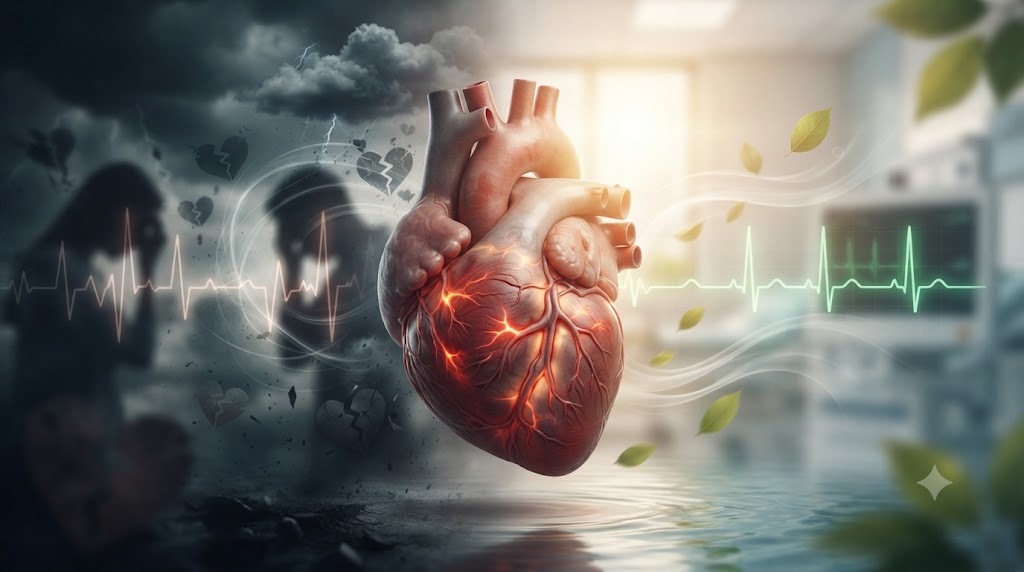
Extreme stress can affect far more than your emotions. A sudden loss, traumatic experience, relationship crisis, financial pressure, frightening event, or prolonged anxiety can trigger powerful physical responses throughout the body. Your heart may beat faster, your blood pressure can rise, your breathing can change, and your sleep and eating patterns may become disrupted.
For most people, the body’s stress response is temporary and adaptive. But severe or prolonged stress can place additional pressure on cardiovascular health. In some cases, an intense emotional or physical event may even contribute to Takotsubo syndrome, commonly called broken heart syndrome.
The good news is that protecting your heart during difficult periods does not require perfection. Small, consistent actions—including getting appropriate medical care, sleeping adequately, eating nourishing foods, staying gently active, managing stress and maintaining social connections—can support both emotional and cardiovascular recovery. ❤️


🧠 What Happens to Your Heart When You Experience Extreme Stress?
When your brain detects a threat, it activates the body’s stress response. The sympathetic nervous system releases chemicals such as adrenaline, while the adrenal glands and other systems contribute to hormonal changes involving cortisol.
These changes prepare you to respond quickly.
Your heart may begin beating faster. Blood vessels can constrict, increasing blood pressure. Breathing may become faster, muscles become tense, and glucose becomes more readily available for immediate energy.
This response is useful when you need to react to a short-term danger.
The problem is different when your body remains in a heightened state of stress for long periods.
Chronic psychological stress can be associated with poor sleep, elevated blood pressure, unhealthy eating patterns, reduced physical activity and increased use of tobacco or alcohol. These behaviors and physiological changes can collectively increase cardiovascular risk.
This doesn’t mean that every stressful experience damages the heart. Instead, it highlights why recovery from prolonged stress matters.
💔 What Is Broken Heart Syndrome?
One of the most fascinating examples of the connection between emotions and the cardiovascular system is Takotsubo syndrome, also known as stress-induced cardiomyopathy or broken heart syndrome.
The condition can occur after intense emotional or physical stress.
Potential triggers include:
- Death of a loved one
- Major relationship conflict
- Sudden fear
- Serious illness
- Accidents
- Natural disasters
- Financial or emotional crises
- Major surgery or other physical stress
Interestingly, the trigger doesn’t always have to be negative. Extremely exciting or surprising events can occasionally precede Takotsubo syndrome as well.
The condition can cause temporary weakening of part of the heart muscle.
Symptoms can resemble those of a heart attack, including chest pain and shortness of breath.
That is why someone experiencing sudden cardiac symptoms should never assume that stress is the explanation.
Emergency evaluation is important.
🚨 Chest Pain After Emotional Trauma Should Never Be Ignored
After a frightening or emotionally overwhelming event, it can be tempting to assume that chest tightness, racing heart or shortness of breath is simply anxiety.
Sometimes it is.
But because anxiety and cardiovascular emergencies can produce overlapping symptoms, self-diagnosis can be dangerous.
Seek urgent medical attention if you experience symptoms such as:
❤️ Chest pressure or pain
Especially if the discomfort is severe, persistent, recurrent or associated with other symptoms.
😮💨 Sudden shortness of breath
Difficulty breathing that appears unexpectedly should be evaluated, particularly when accompanied by chest discomfort.
💪 Pain spreading to other areas
Pain or discomfort may sometimes travel toward the arm, shoulder, back, neck or jaw.
🥶 Cold sweating
Unexplained sweating combined with chest discomfort can be a warning sign.
🤢 Nausea or vomiting
These symptoms can sometimes accompany cardiovascular emergencies.
😵 Fainting or severe dizziness
Loss of consciousness or significant weakness requires urgent evaluation.
💓 New or severe palpitations
A racing or irregular heartbeat accompanied by chest pain, fainting or severe breathlessness warrants medical assessment.
When in doubt, seek emergency medical care rather than trying to determine whether the symptoms are caused by anxiety.
🌬️ 1. Start With Your Breathing
One of the simplest ways to respond to acute stress is to slow your breathing.
During intense anxiety, people may unconsciously breathe rapidly and shallowly. This can make sensations such as dizziness, tingling and a racing heartbeat feel even more frightening.
Try sitting comfortably and breathing gently.
You can experiment with:
Slow inhale → relaxed pause → slightly longer exhale.
Don’t force huge breaths. Instead, focus on making your breathing smooth and comfortable.
Spend several minutes doing this.
The purpose isn’t to “cure” stress instantly. It is to give your nervous system an opportunity to move away from a state of constant alarm.


🚶 2. Use Gentle Physical Activity
When you’re dealing with emotional trauma, intense exercise may feel impossible.
That’s okay.
You can begin with something much simpler: walking.
A short walk can provide gentle movement while giving you a change of environment. It may also help interrupt repetitive thoughts.
Over time, gradually returning to regular physical activity can support cardiovascular fitness and overall well-being.
However, anyone experiencing new chest pain, unexplained breathlessness, fainting or other concerning symptoms should obtain medical advice rather than attempting to exercise through them.
The goal during recovery isn’t to win a fitness competition.
The goal is consistent movement that your body can safely tolerate.
😴 3. Protect Your Sleep During Emotional Stress
Sleep is often one of the first things disrupted by grief and trauma.
You may find yourself lying awake replaying conversations or worrying about what will happen next.
Unfortunately, insufficient sleep can make emotional regulation more difficult and can negatively affect several cardiovascular risk factors.
Try creating a predictable evening routine.
You could:
🌙 Go to bed at approximately the same time each night.
📱 Reduce stimulating screen use before bedtime.
☕ Avoid excessive caffeine later in the day.
🧘 Practice relaxation or breathing exercises.
🌤️ Get natural daylight during the day.
🛏️ Keep your bedroom comfortable and quiet.
Don’t become obsessed with achieving perfect sleep. That can create another source of anxiety.
Instead, focus on creating conditions that encourage your body to rest.
🥗 4. Eat to Support Your Heart
Emotional trauma can completely change appetite.
Some people eat very little. Others crave highly processed foods, sweets or salty snacks.
During a difficult period, don’t aim for a perfect diet.
Aim for simple, nourishing meals.
A heart-supportive eating pattern can include:
🥦 Vegetables
🍎 Fruits
🌾 Whole grains
🫘 Beans and lentils
🥜 Nuts and seeds
🐟 Fish and other nutritious protein sources
🥑 Healthy sources of unsaturated fats
🥛 Appropriate low-fat or fermented dairy foods, depending on individual needs
Adequate hydration is also important.
A nutritious meal may not solve emotional pain, but maintaining adequate nutrition gives your body the resources it needs while you recover.
☕ 5. Be Mindful of Caffeine
Coffee and tea can be part of a healthy lifestyle for many people.
However, very high caffeine intake may increase feelings of nervousness or cause noticeable palpitations in some individuals.
If you’re already experiencing severe anxiety, insomnia or a racing heartbeat, consider whether your caffeine intake is making these sensations worse.
Energy drinks deserve particular caution because some contain substantial amounts of caffeine and other stimulants.
Pay attention to your individual response.
🚭 6. Don’t Use Smoking or Alcohol as Your Main Coping Strategy
Emotional trauma can create a strong desire for immediate relief.
For some people, that means smoking more.
For others, alcohol becomes a way to temporarily escape painful emotions.
The problem is that these strategies can create additional health problems while failing to address the underlying trauma.
Smoking is a major cardiovascular risk factor, while excessive alcohol consumption can negatively affect blood pressure, heart rhythm, sleep and other aspects of health.
If you notice that you’re increasingly relying on substances to cope, speaking with a healthcare or mental-health professional can be an important step.
Asking for help is not failure.
It is heart protection.
🤝 7. Don’t Isolate Yourself
One of the most powerful things you can do after emotional trauma is maintain human connection.
You don’t need to explain everything perfectly.
You might simply tell someone:
“I’m having a difficult time right now. Can you stay with me or talk to me?”
A trusted friend, family member, counselor, therapist, religious or community leader, or support group may provide valuable emotional support.
Social connection can help reduce feelings of isolation and can make difficult periods easier to navigate.
If talking feels impossible, even spending time with someone quietly can help.
🧘 8. Create Small Moments of Calm
You don’t need to meditate for an hour every morning to manage stress.
Start with five or ten minutes.
Possible activities include:
🧘 Meditation
🙏 Prayer
🌳 Sitting outdoors
🎵 Listening to calming music
📖 Reading
✍️ Journaling
🌬️ Breathing exercises
🧘♀️ Gentle stretching or yoga
These practices aren’t substitutes for medical treatment, but they can become useful components of a broader stress-management routine.
The goal is to give your nervous system regular opportunities to experience calm.
🧠 9. Take Psychological Trauma Seriously
Physical heart health and mental health are deeply interconnected.
After a traumatic experience, some people develop persistent anxiety, depression, panic symptoms, intrusive memories, nightmares or difficulty functioning in everyday life.
You don’t have to wait until things become unbearable before seeking professional help.
A qualified mental-health professional can help you process what happened and develop strategies for managing symptoms.
Therapy may provide a structured environment where you can safely discuss emotions that feel overwhelming or difficult to explain to family and friends.
🩺 10. Keep Taking Your Prescribed Medicines
Stress can make normal routines fall apart.
You may forget medications, miss appointments or stop monitoring your blood pressure.
If you’re taking prescribed medication for conditions such as hypertension, high cholesterol, diabetes or cardiovascular disease, follow your healthcare professional’s instructions.
Don’t stop cardiovascular medication suddenly unless your clinician tells you to.
If you are experiencing side effects or are uncertain whether a medicine is still appropriate, contact your healthcare provider.
🩸 11. Keep an Eye on Blood Pressure
Blood pressure can change during periods of acute stress.
If you already have hypertension, emotional distress can make maintaining healthy readings more challenging.
If your doctor has recommended home monitoring, follow the recommended measurement technique and schedule.
Don’t become frightened by a single reading. Blood pressure naturally fluctuates.
Instead, discuss persistent abnormal readings with your healthcare professional.
Remember that high blood pressure can exist without obvious symptoms, which is why routine monitoring matters.
🧪 12. Don’t Forget Cholesterol and Blood Sugar
Stressful life events can distract you from preventive healthcare.
But cardiovascular protection also involves understanding your underlying risk factors.
Depending on your age and health history, your doctor may recommend monitoring:
LDL cholesterol
Blood pressure
Blood glucose or HbA1c
Body weight
Kidney function
Other cardiovascular risk indicators
Managing these factors can reduce your long-term cardiovascular risk even when life becomes emotionally difficult.
🧠 The Heart-Brain Connection
Your brain and cardiovascular system communicate continuously.
The autonomic nervous system helps regulate heart rate and blood pressure. Hormones influence metabolism and circulation. Emotional states can change breathing patterns, muscle tension and cardiovascular activity.
This explains why intense emotions can produce very real physical sensations.
You might feel:
💓 A racing heartbeat
😮💨 Breathlessness
🥶 Sweating
😵 Dizziness
💪 Muscle tension
🤢 Stomach discomfort
These symptoms can occur during anxiety and panic.
However, the overlap between anxiety symptoms and heart problems means that new, severe or unusual symptoms should not automatically be attributed to stress.
❤️ A Simple Heart-Protection Routine During Difficult Times
When everything feels overwhelming, complicated health plans can become difficult to follow.
Instead, think about a simple daily framework.
🌅 Morning
Drink water and eat something nourishing if you can.
Get some daylight and take a short walk if you’re physically able.
Take prescribed medication as directed.
☀️ Afternoon
Eat a balanced meal.
Take a few minutes to breathe slowly.
Stay connected with another person.
🌆 Evening
Reduce excessive caffeine and alcohol.
Take a gentle walk or stretch if appropriate.
Spend some quiet time away from stressful information.
🌙 Before bed
Practice several minutes of slow breathing.
Write down worries rather than repeatedly replaying them.
Maintain a consistent bedtime as much as possible.
The objective isn’t perfection.
It’s stability.
💡 What If You Feel Like You’re Not Recovering?
Recovery from trauma isn’t always linear.
One day you may feel relatively normal. The next day a memory, conversation, anniversary or unexpected reminder may bring the emotions back.
That doesn’t necessarily mean you’re failing.
Healing can involve setbacks.
However, if symptoms remain intense, interfere with work or relationships, cause persistent sleep problems or make everyday life difficult, professional support is appropriate.
Don’t feel that you need to “be strong” by handling everything alone.
🚨 When You Should Seek Immediate Help
Some situations require urgent medical attention.
Seek emergency care for new or severe chest pain, significant breathing difficulty, fainting, severe weakness, or symptoms suggesting a heart attack or serious heart rhythm problem.
Likewise, severe psychological distress deserves immediate attention.
If you feel that you might hurt yourself or someone else, don’t remain alone. Contact emergency services, a crisis service or a trusted person who can stay with you and help you obtain immediate professional care.
Your safety comes first.
🌿 Can Lifestyle Really Protect the Heart During Stress?
Lifestyle habits cannot eliminate every cardiovascular risk.
But they can help create a healthier foundation.
Think of stress management as one part of a larger heart-health picture:
Healthy food + physical activity + adequate sleep + avoiding tobacco + appropriate alcohol use + medical care + social support + psychological care
Together, these factors can support cardiovascular and overall health.
The important point is to avoid an all-or-nothing mindset.
If you’re going through a crisis, walking for ten minutes may be better than doing nothing.
Eating one nutritious meal is better than skipping food all day.
Calling one trusted person is better than suffering completely alone.
Going to bed a little earlier can be a meaningful first step.
Small actions accumulate.
🫀 Protecting Your Heart Is Also About Protecting Your Emotional Health
We often separate physical health from mental health.
But the body doesn’t work that way.
Emotional experiences can influence hormones, nervous-system activity, sleep, appetite, movement and health behaviors. Those changes can affect cardiovascular health.
That’s why emotional recovery deserves to be treated as part of overall health—not as something secondary.
If you’ve experienced a major loss or traumatic event, give yourself permission to recover gradually.
You don’t have to return to normal overnight.
🔬 What Research Is Teaching Us About Stress and Cardiovascular Health
Modern cardiovascular research increasingly recognizes that psychological and social factors can influence cardiovascular outcomes.
Researchers are studying how chronic stress, anxiety, depression, loneliness, sleep disruption and traumatic experiences interact with cardiovascular disease.
At the same time, scientists are investigating why some people develop conditions such as Takotsubo syndrome after major stress while others do not.
The picture is complex.
Genetics, age, sex, existing cardiovascular health, hormone responses, nervous-system activity and the nature of the stressful event may all contribute.
This is why the relationship between stress and heart health cannot be reduced to the idea that “stress causes heart attacks.”
The reality is more nuanced.
❤️ A 7-Day Heart-Friendly Stress Reset
If you’ve recently experienced severe stress, you can begin with a simple seven-day approach.
Day 1 — Slow Down 🌬️
Spend five minutes practicing slow, comfortable breathing.
Day 2 — Walk 🚶
Take a gentle walk if you’re medically able.
Day 3 — Connect 🤝
Call or meet someone you trust.
Day 4 — Eat Well 🥗
Prepare a simple meal centered around vegetables, whole grains and a nutritious protein source.
Day 5 — Sleep 🌙
Create a relaxing evening routine and prioritize adequate sleep.
Day 6 — Unplug 📵
Take a break from stressful news, social-media arguments and other unnecessary sources of stimulation.
Day 7 — Check In 🩺
Consider whether you need medical or psychological support and arrange an appointment if appropriate.
This isn’t a treatment program.
It’s simply a reminder that small steps can help you regain stability after a difficult experience.
🌟 Final Thoughts: Your Heart Deserves Care During Emotional Storms
Extreme stress can make life feel as though everything has changed at once.
During these periods, your heart deserves attention too.
Protecting cardiovascular health doesn’t mean pretending that you’re okay. It means acknowledging that emotional trauma can affect the body and taking practical steps to support yourself.
❤️ Eat nourishing foods.
🚶 Move gently when appropriate.
🌙 Protect your sleep.
🌬️ Practice slow breathing.
🤝 Stay connected.
🚭 Avoid tobacco.
🍷 Avoid using alcohol as your primary coping strategy.
🩺 Continue appropriate medical care.
🧠 Seek professional psychological support when needed.
🚨 And never dismiss serious chest symptoms as “just stress.”
Broken heart syndrome demonstrates that the relationship between emotional experiences and the heart can be remarkably powerful. But your response to stress can also become an opportunity to prioritize your health.
You don’t need to fix everything today.
Take the next healthy step. Then take another tomorrow. Your heart—and your whole body—deserve that care. ❤️🫀
Suggested SEO Details
Meta Title: How to Protect Your Heart During Extreme Stress and Emotional Trauma
Meta Description: Learn how extreme stress affects your heart, what broken heart syndrome is, and practical ways to protect cardiovascular health during emotional trauma.
Suggested Slug: protect-heart-extreme-stress-emotional-trauma
Tags: heart health, stress and heart health, emotional trauma, broken heart syndrome, Takotsubo syndrome, cardiovascular health, stress management, mental health, heart disease prevention, healthy lifestyle, emotional stress, heart protection, wellness, sleep and heart health, anxiety and heart health